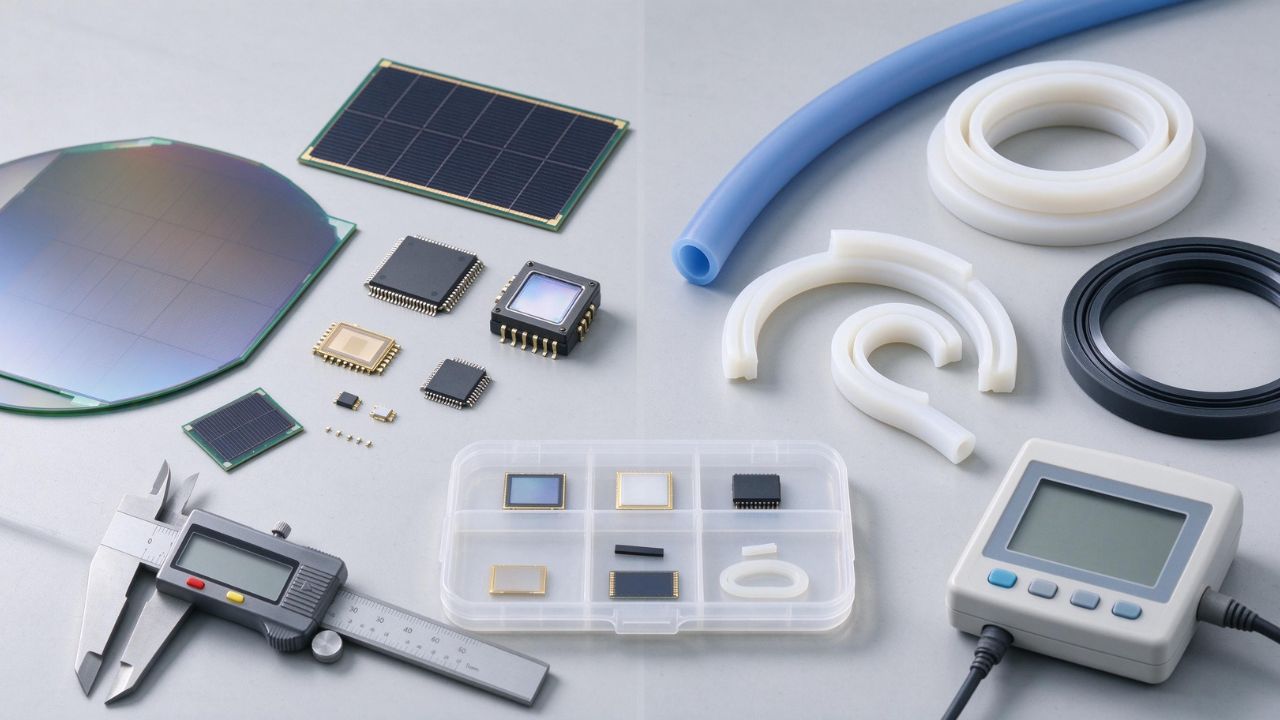
Confusing silicone with latex, or sourcing silicone with hidden latex contamination, can result in non-compliant products, batch rework, and cost overruns. This guide explains whether silicone contains latex and how to verify latex-free silicone products, helping you evaluate silicone products against your latex-related sourcing requirements.
What Is Latex?
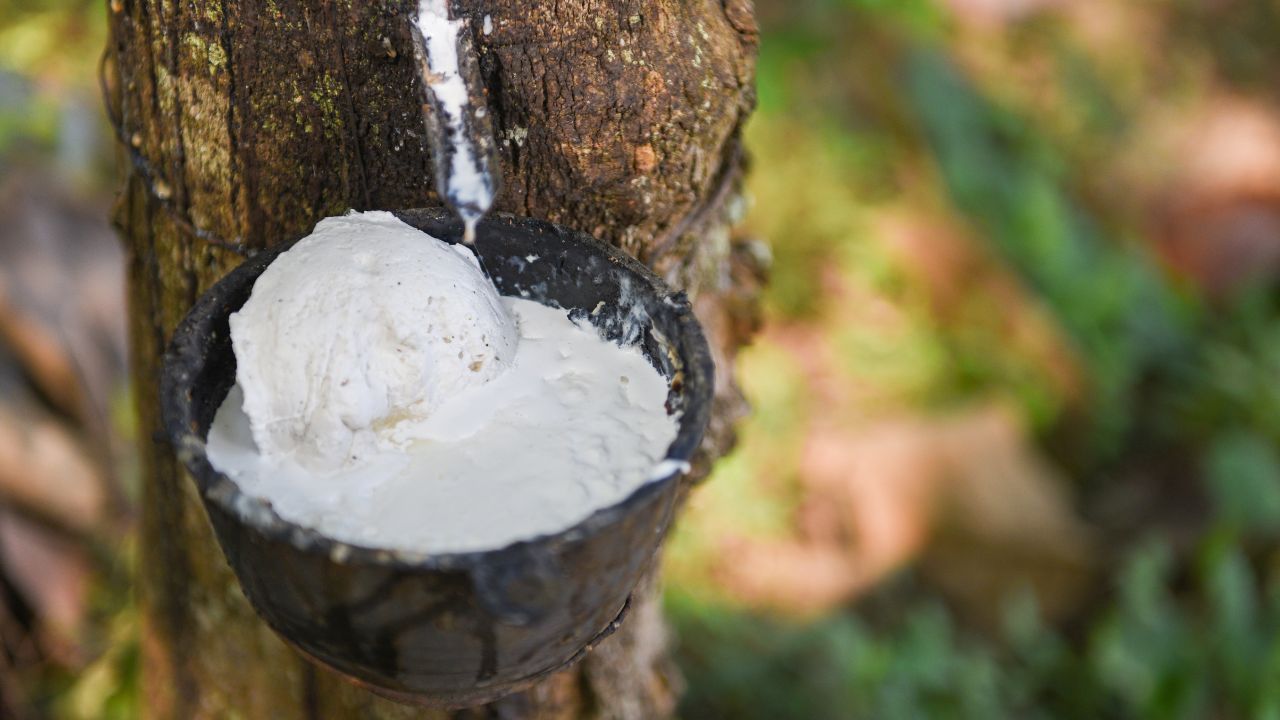
Natural rubber latex is a milky fluid obtained from the rubber tree, Hevea brasiliensis. It exhibits excellent elasticity, tear resistance, and moisture resistance. However, natural latex contains proteins, which may cause severe allergic reactions in some people.
Synthetic latex is made from synthetic polymers rather than natural rubber latex. It does not contain the natural rubber proteins associated with latex allergy, although its additives or other components may cause separate reactions in some individuals.
In the context of latex allergy, the primary concern is natural rubber latex because its proteins can trigger allergic reactions in sensitized individuals.
Both natural and synthetic latex are valued for their high elasticity and abrasion resistance across industrial applications:
- Industrial gloves & personal protective equipment (PPE)
- Sealants & pressure-sensitive adhesives
- Foam gaskets & cushioning components
What Is Silicone?
A common misconception is that silicone comes from rubber, but silicone is not made from latex or any natural rubber source.
Silicone is a family of synthetic silicon-based polymers characterized by a repeating silicon–oxygen backbone with organic groups attached to the silicon atoms. Depending on its polymer structure, molecular weight, and cross-linking, silicone can be supplied as a fluid, gel, elastomer, or resin.
The siloxane structure gives silicone a combination of properties associated with both inorganic and organic materials. Depending on the formulation and grade, silicone can offer low surface energy, thermal stability, flexibility, weather resistance, UV resistance, and chemical resistance.
Silicone is available in three classifications with varying degrees of mechanical strength, thermal resistance, and biocompatibility. The following are the common application areas of silicone:
- Food-Grade Silicone: Food contact tubing, gaskets, and conveyor components
- Medical-Grade Silicone: Implants, catheters, surgical devices, and pharmaceutical processing parts
- Industrial-Grade Silicone: Seals, gaskets, insulation, and outdoor engineering components
Does Silicone Contain Latex? Core Properties Comparison
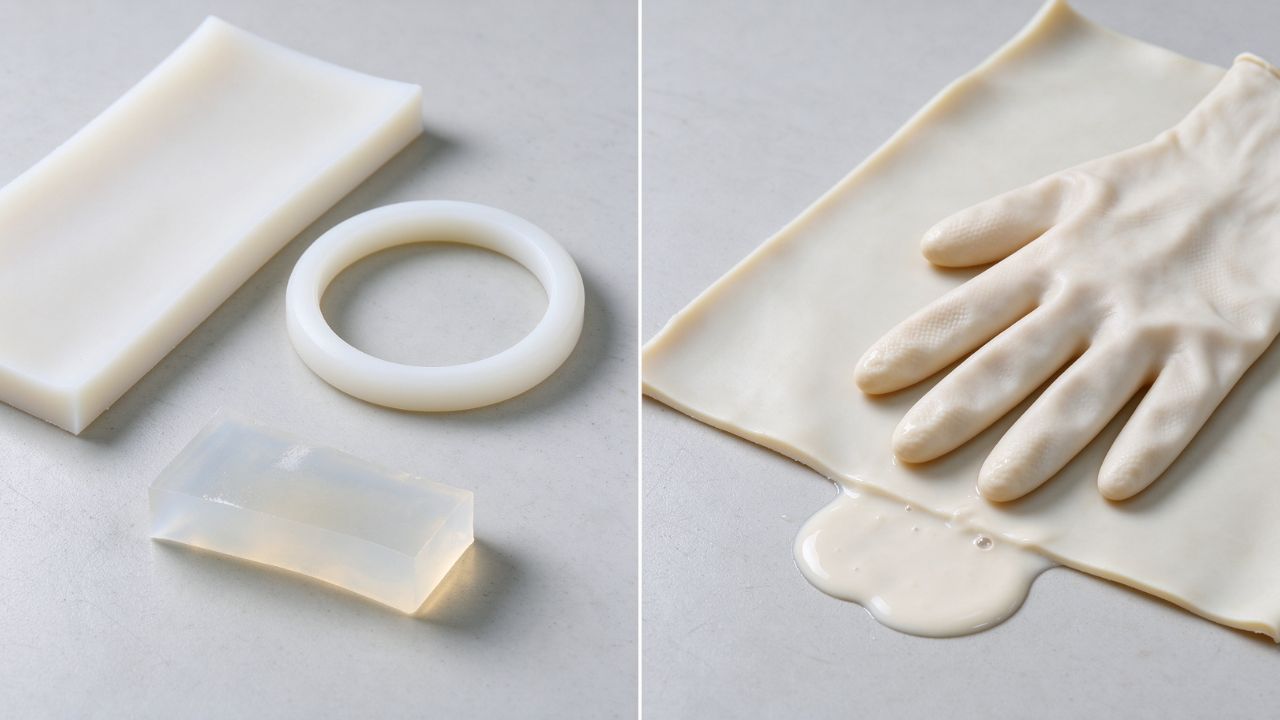
Silicone itself does not contain natural rubber latex because they are two completely different materials with distinct chemical structures and physical properties. Silicone is a synthetic polymer based on silicon–oxygen bonds, with organic groups attached to the silicon atoms, while latex is derived from the sap of natural rubber trees. The table below provides a side-by-side silicone vs. latex property comparison for industrial sourcing.
| Properties | Silicone | Natural Latex |
| Material Type | Synthetic polymer | Natural polymer |
| Typical Structure | Silicon, oxygen, carbon, hydrogen | Polyisoprene, water, proteins |
| Hardness (Shore A) | 10–70 A (typical, customizable by formulation) | 38 A |
| Tensile Strength (MPa) | 4–10 MPa (typical for general grade) | 25 MPa |
| Flexibility (Elongation (%)) | 300–700% | 830% |
| Chemical Resistance | Resistant to high-temperature water, salt water, brake fluid | Poor ( Susceptible to oils, solvents, ozone cracking) |
| Maximum Operating Temperature (°C) | 200–250 °C (depending on grade) | 70 ℃ |
| Heat Resistance | Excellent thermal resistance (typically withstands -60℃ to 250+℃) | Poor comparative heat resistance (Prone to degradation/deformation at high temperatures) |
| Allergenic Potential | Very low – no latex proteins; will not trigger latex allergy reactions. | Higher (Natural proteins can trigger allergic reactions) |
| Recyclability and Sustainability | Thermoset silicone is not mechanically recyclable in standard waste streams, but is chemically stable and does not leach toxic substances under normal use | Natural latex: non-recyclable but biodegradable Synthetic latex: not sustainable and non-recyclable |
| Cost | The price depends on the grade used and can vary significantly | Natural latex is usually more expensive than synthetic latex |
When Can a Silicone Product Involve Latex?
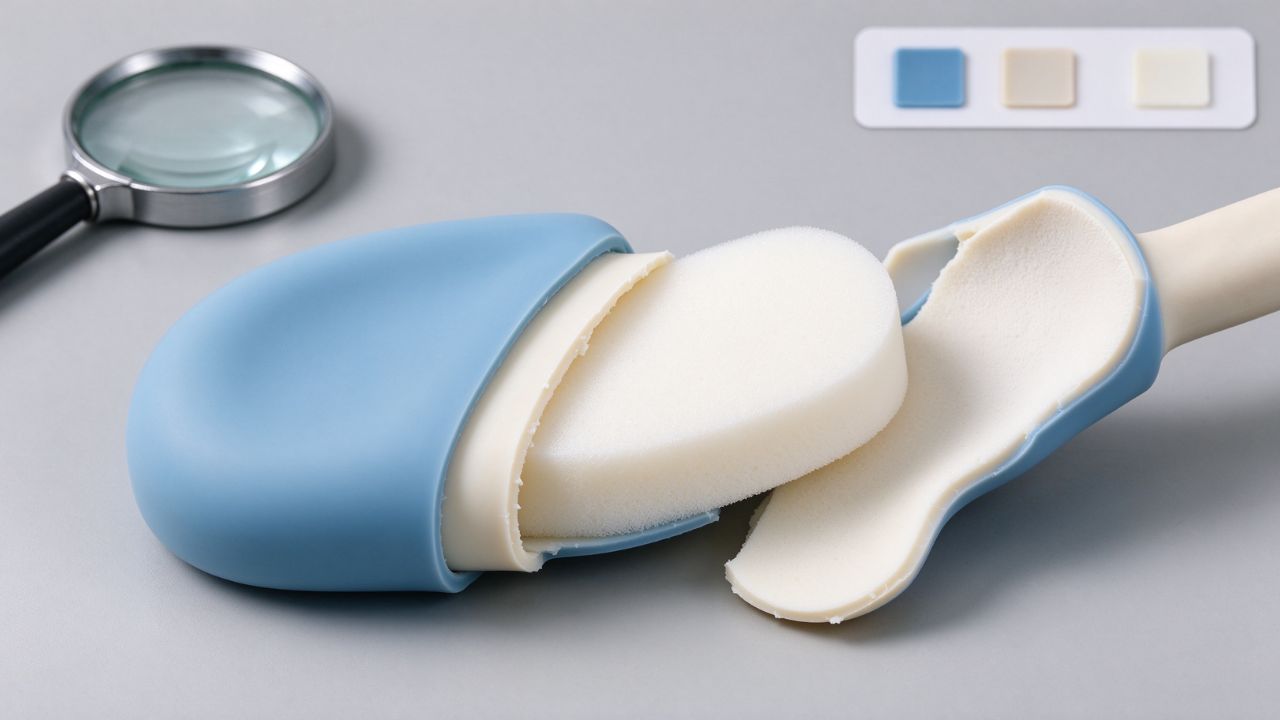
Although silicone itself is not natural rubber latex, a finished silicone product may involve latex-containing components or require controls against unintended cross-contamination, depending on the manufacturing process.
Shared Production Line with Natural Latex Products
This is the most common cause of silicone latex cross-contamination in bulk production. If different elastomer materials are processed using shared equipment without appropriate segregation and cleaning controls, residues from another material could potentially transfer to equipment or product-contact surfaces, resulting in the silicone products you require containing a small amount of latex.
Composite Multi-Material Finished Products
Some mixed-type consumer products combine a silicone outer layer with an internal foam, handle, or back adhesive made of latex rubber. Only the silicone shell does not contain latex; the accompanying latex components pose a sensitization risk for individuals with latex sensitivity.
Low-Cost Untested Silicone Additives
Cheap general-purpose silicone fillers, colorants, or adhesives from unregulated raw material suppliers may contain trace amounts of latex contaminants from third-party formulation facilities. Recycled silicone in particular carries a higher risk of hidden latex content from mixed material streams.
Common Myths About Silicone and Latex
Myth 1: Silicone Is a Form of Natural Latex Rubber
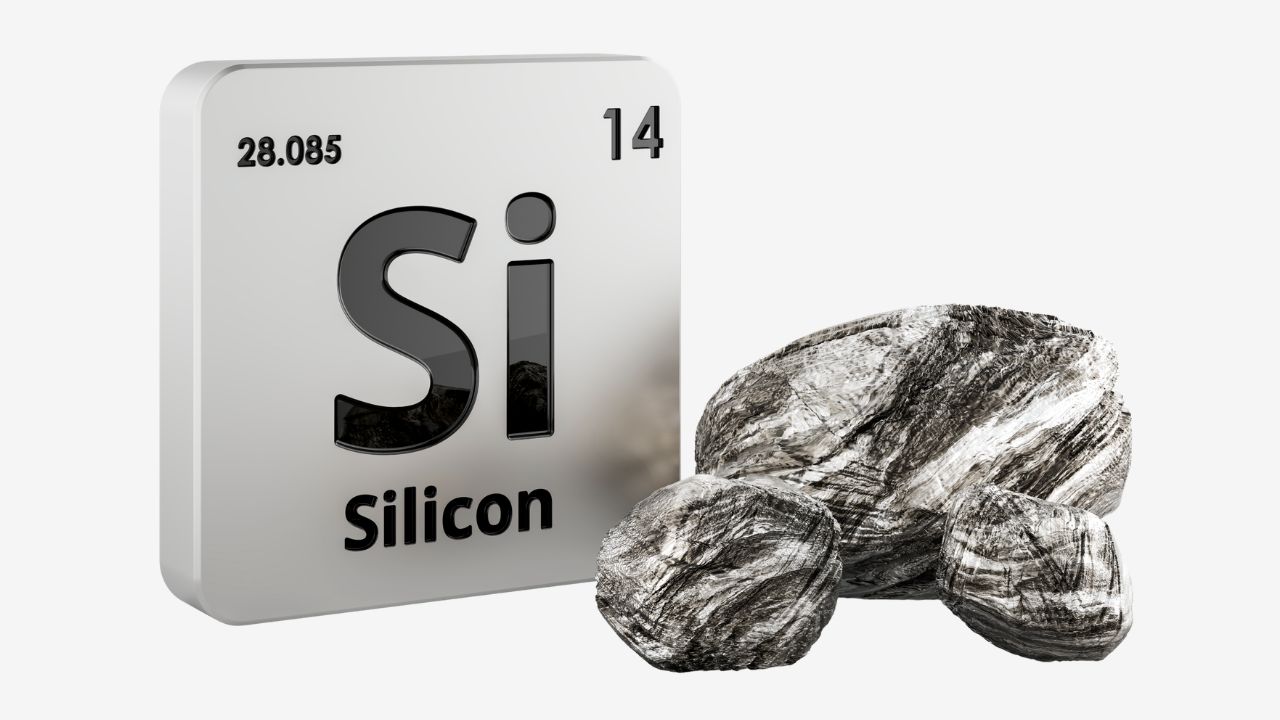
This is one of the most common misunderstandings. Silicone is a synthetic polymer with a silicon–oxygen backbone and organic groups attached to silicon atoms. Natural latex is an organic material extracted from rubber trees and contains natural proteins that can trigger allergic reactions. These two materials are completely different in terms of chemical composition, physical properties, and allergenicity.
Myth 2: All Soft, Elastic Rubber Materials Contain Latex
The elasticity itself cannot be used as a basis for determining the latex content. The flexibility and extensibility of silicone are related to the structure and flexibility of its siloxane backbone, together with its molecular weight and cross-link density. It has good extensibility even without natural latex proteins. Therefore, if you rely solely on touch or degree of stretch to determine the material composition, it will lead to deviations in your purchasing decisions.
Myth 3: “Latex-Free” Labeling Guarantees Zero Latex Content
The unified regulatory standards for “latex-free” vary across different industries and regions. Some standards stipulate that the product is considered compliant if the latex content is below a certain threshold, while others require the latex protein content to be zero.
Myth 4: Industrial-Grade Silicone Doesn’t Need Latex Testing
Industrial-grade silicone does not automatically require latex testing. Testing or supplier verification may be appropriate when the application, customer specification, manufacturing environment, or regulatory requirements make latex exclusion relevant.
How to Verify That Silicone Products Are Latex-Free? A Checklist for Industrial Buyers
If you purchase silicone products that contain a small amount of latex, it may result in your products being recalled, damage to the brand’s reputation, and high compensation claims. Here are the methods that can effectively identify and verify whether silicone products contain latex:
Request Relevant Compliance and Test Documentation

The most reliable proof is official latex-free certification from accredited third-party laboratories. Make sure to ask the supplier to provide the global certification report, and verify that materials meet global industry-specific standards:
- 21 CFR 177.2600 — applicable U.S. requirements for repeated-use rubber articles, where relevant
- LFGB-related food-contact testing, where applicable to the German market
- ISO 10993 series — biological evaluation of medical devices, where applicable
For food-contact or medical applications, verify the applicable grade-specific compliance documentation separately from evidence supporting the latex-free claim. For U.S. medical devices, 21 CFR 801.437 establishes specific labeling requirements for devices that contain natural rubber and contact humans.
Verify Raw Materials
Ask the supplier about the ingredients of the base materials used to produce the silicone products, or look for the words “natural rubber latex” or “Brazilian rubber tree” in the ingredient list. If your requirement excludes both natural rubber latex and synthetic latex materials, state this explicitly in the purchasing specification and verify each component accordingly.
Avoid Choosing Suppliers with Insufficient Documentation
If a supplier offers you a very low price, then it is likely that they are using cheap fillers, recycled plastics, or producing in non-compliant production environments, which may result in latex cross-contamination. You should evaluate suppliers based on material traceability, production controls, documentation, and test evidence.
Request Independent Test Report

You can ask the supplier for a current third-party test report that identifies the tested product, test method, laboratory, test date, and applicable specification. The third-party testing organizations include SGS, Intertek, and TÜV Rheinland.
FAQ
Can Silicone Cause a Reaction in People with Severe Latex Allergies?
Pure silicone has low allergenicity and does not contain proteins that cause latex allergies. Although allergic reactions to silicone itself are extremely rare, in a few non-medical-grade products, there may be inferior chemical fillers, dyes, or residual additives, and some people may experience mild contact dermatitis. For allergy-sensitive applications, verify the material composition and relevant documentation for the complete product.
Can Someone With a Latex Allergy Use Silicone Products Safely?
Yes, for those who are allergic to latex, choosing certified high-quality silicone products is a safe and reliable alternative, as they do not contain latex proteins and have low allergenicity. However, if a rare silicone allergy reaction occurs, it may be due to an allergy to other materials or contaminants used in the silicone production process, rather than a latex allergy.
Is Food-Grade Silicone Safe for People With Latex Allergies?
Food-contact silicone is not automatically equivalent to a latex-free claim. It is a formulated silicone material designed to meet applicable food-contact requirements, and it is suitable for those who are allergic to latex.
Is There Cross-Reactivity Between Silicone and Latex?
Medical material tests have confirmed that there is no molecular cross-reaction between silicone and natural rubber latex. Because silicone and latex are two materials with completely different chemical structures, if you are allergic to both silicone and latex, it might be an allergy to the materials themselves. For instance, using non-medical-grade or inferior silicone products could cause such an allergy.
Does Medical-Grade Silicone Contain Latex?
No, medical-grade silicone does not contain latex. It is specifically manufactured to meet strict biocompatibility standards and is widely used in implants, catheters, and devices for patients who are allergic to latex.
Does Silicone or Latex Last Longer in Direct Sunlight?
Silicone usually lasts longer in sunlight because it resists UV, ozone, and weathering better than natural latex. Latex breaks down when exposed to UV, ozone, and heat cycles. However, the actual service life of silicone and latex products depends on the material grade, formulation, product geometry, exposure conditions, and temperature.
Final Thoughts
Pure silicone itself does not contain latex and has an extremely low probability of causing allergic reactions. It is a potential latex alternative. Send us your silicone grade requirements, application, and product drawing if you are sourcing latex-free silicone products. NICEONE can provide custom latex-free silicone products and a detailed quotation for you.