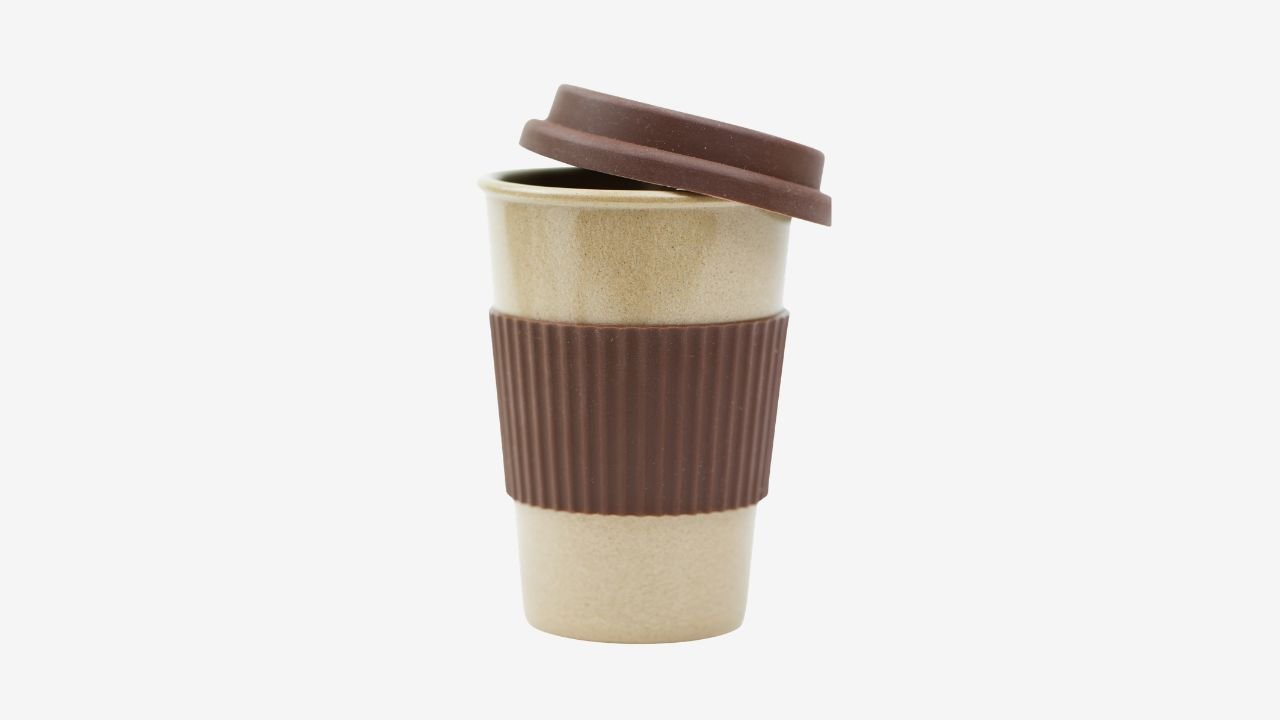
Confusing silicon with silicone can lead to incorrect material selection, affecting product performance and increasing production costs. This article explains the key differences between silicon and silicone, helping you avoid misconceptions about silicon and silicone and thus choose a reliable industrial silicon or silicone product supplier.
What Is Silicon?
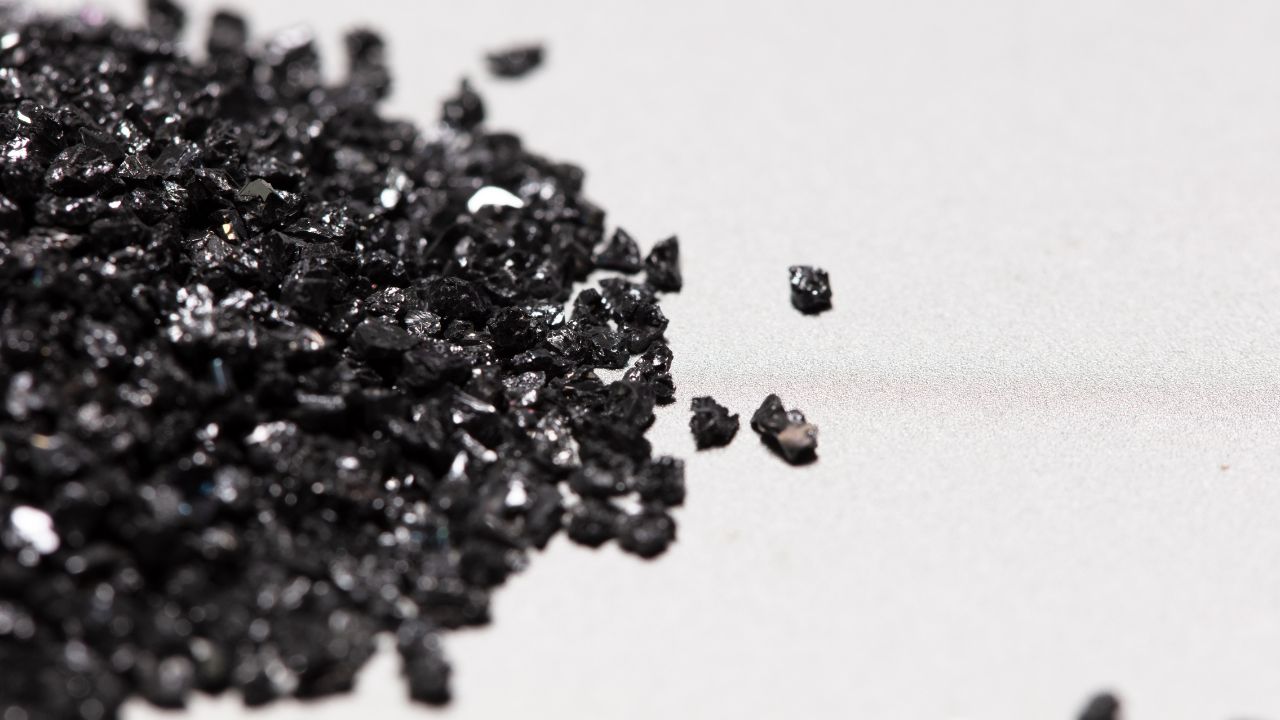
Silicon is a naturally occurring chemical element classified as a metalloid. Its symbol in the periodic table is Si, with an atomic number of 14 and a relative atomic mass of 28.086. Silicon is abundant in the Earth’s crust, second only to oxygen. Silicon is rarely found as a free element in nature and commonly occurs in compounds such as silicon dioxide (SiO₂), the main component of quartz.
Silicon is relatively stable under normal conditions, although its surface can react with certain chemicals under specific conditions.
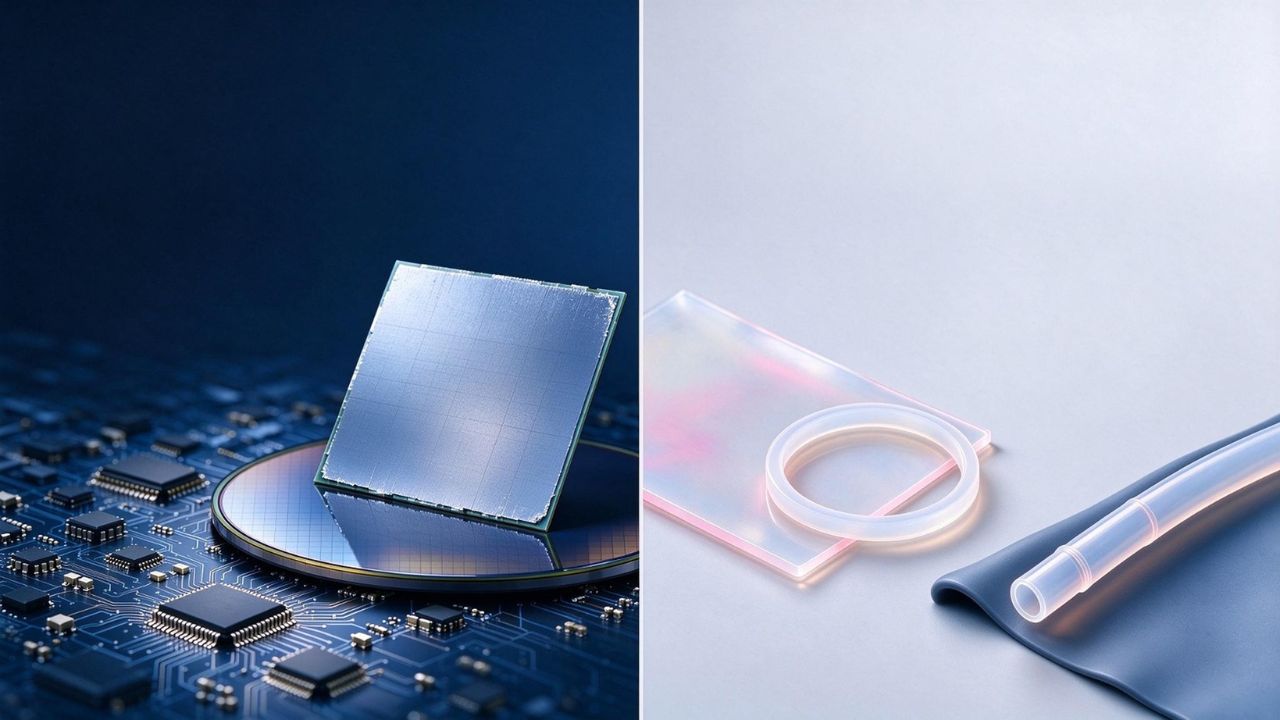
Due to its excellent semiconductor properties, silicon has become the main element for manufacturing computer chips and is indispensable in the electronics industry, computer industry, optical fiber communication, and solar energy fields.
What Is Silicone?
Silicone is a family of synthetic silicon-based polymers characterized by a repeating silicon–oxygen backbone with organic groups attached to the silicon atoms. Depending on its polymer structure, molecular weight, and cross-linking, silicone can be supplied as a fluid, gel, elastomer, or resin.
Due to its unique structure, silicone combines the characteristics of inorganic and organic materials. It has basic properties such as low surface tension, low viscosity, and good resistance to weathering and UV exposure, and also has excellent properties such as resistance to high and low temperatures and low toxicity, and is often used in the beauty, medical, food, and cable industries.
Core Differences Between Silicon and Silicone
Although silicon and silicone have similar names, they are two completely different substances in terms of their chemical structure, physical properties, and practical applications. To facilitate your comparison, the following table provides a detailed list of the differences in various attributes between silicon and silicone.
Chemical and Physical Properties
| Property | Silicon | Silicone |
| Chemical Structure | A single chemical element | A polymer composed of repeating Si-O chains and organic side groups |
| Room Temperature State | Solid, fragile crystal | Flexible elastic solid |
| Thermal Performance | Melting point: 1414°C | No single melting point; crosslinked silicone elastomers generally decompose rather than melt when sufficiently heated |
| Electrical Conductivity | Semiconductive; conditionally conductive | Generally electrically insulating; conductive silicone formulations are also available |
| Flexibility / Elongation | Rigid; Breaks when bent | Highly flexible; elongation varies significantly by formulation and grade |
| Chemical Stability & Safety | Not typically used as a food-contact or medical elastomer | Chemical stability varies by formulation; specific grades may be suitable for food-contact or medical applications subject to applicable requirements |
| UV Resistance | Not generally selected for UV-resistant flexible or sealing applications | Generally offers good resistance to UV and weathering, depending on formulation |
| Cost (reference value) | Regular industrial silicon: $1,290 – $1,390/ton High-purity silicon: $1,470 – $1,500/ton Low & transparent pricing. | Industrial grade: $2,000 – $4,000/ton Food grade: $4,500 – $7,000/ton Medical grade: $8,000 – $15,000/ton Higher initial cost, lower long-term cost. |
Practical Uses and Applications
Although silicon and silicone are used in very different applications, some industries may use both materials for different components or functions.
Types of Silicon for Industrial Applications
Silicon, due to its unique semiconductor properties, is mainly used in the electronics industry. As a semiconductor, silicon has electrical properties that can be controlled through doping, making it fundamental to integrated circuits, transistors, sensors, and photovoltaic devices. You can use silicon in the following electronic components:
- Computer chips and processors
- Silicon photovoltaic cells and modules
- Transistors and diodes
- Sensors and integrated circuits
- Semiconductor devices
Types of Silicone for Industrial Applications
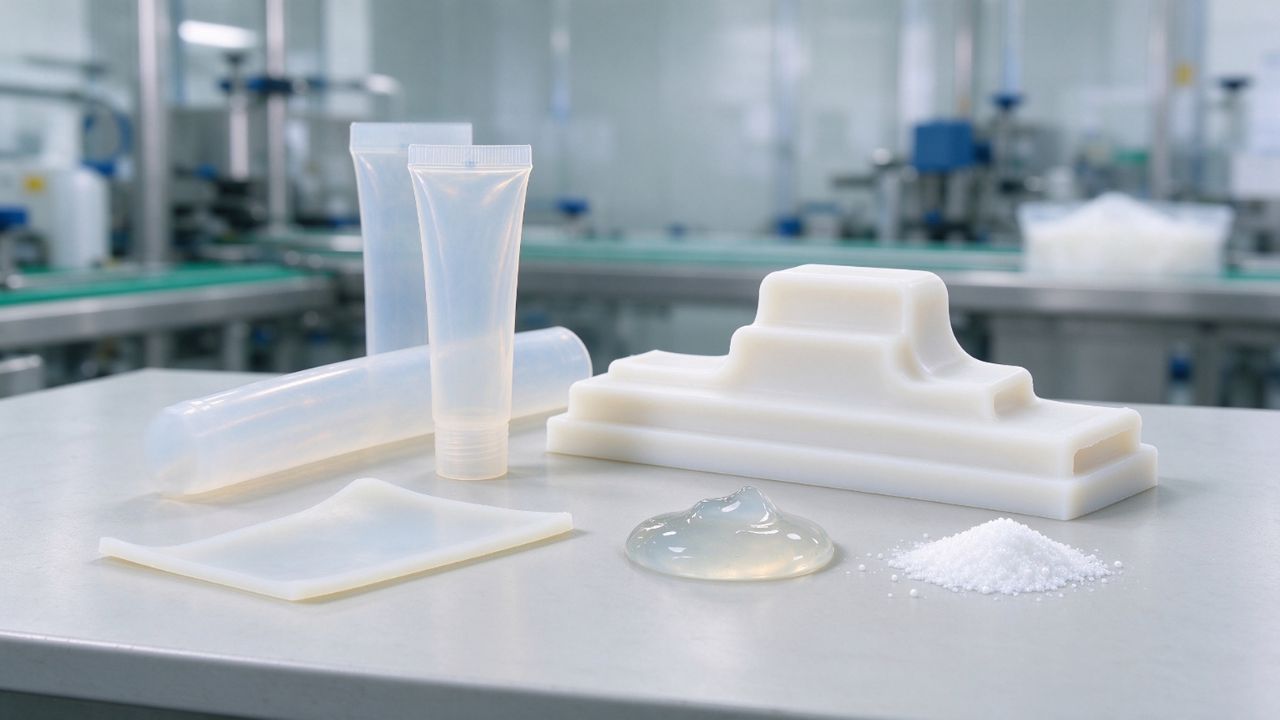
In contrast, silicone is used in physical, mechanical, and hygiene applications. It is favored for its flexibility, stability, as well as its heat resistance, chemical corrosion resistance, and weather resistance. You can use silicone in the following application areas:
- Medical catheters, implants, and devices
- Food-grade seals and baking utensils
- Dairy products and milking equipment (such as linings and pipes)
- Automotive gaskets and engine components
- Industrial seals, molded parts, and extruded parts
Misconceptions About Silicon and Silicone
Misconception 1: Silicone Is Just Melted Silicon
This is the most common misconception. Silicon and silicone are two completely different substances. Although both are derived from the silicon element, silicone is an artificial product made from silicon through chemical synthesis. On the other hand, silicon is a naturally occurring element in the earth’s crust. Apart from sand and glass, silicon usually exists in the form of solid crystals.
Misconception 2: Silicone Is Automatically Safe for Every Application
Silicone safety depends on the formulation, additives, manufacturing process, intended use, and applicable regulatory requirements. A silicone grade suitable for one application may not be suitable for another.
Misconception 3: All Silicone Grades Have the Same Performance
The properties of silicone vary depending on the curing method, filler content, and viscosity. Therefore, its performance varies significantly depending on the polymer type, curing system, filler, and formulation. It can be in the form of a liquid lubricant, semi-solid adhesive, or rubber-like polymer.
Key Decision Factors: How to Choose the Right Material?
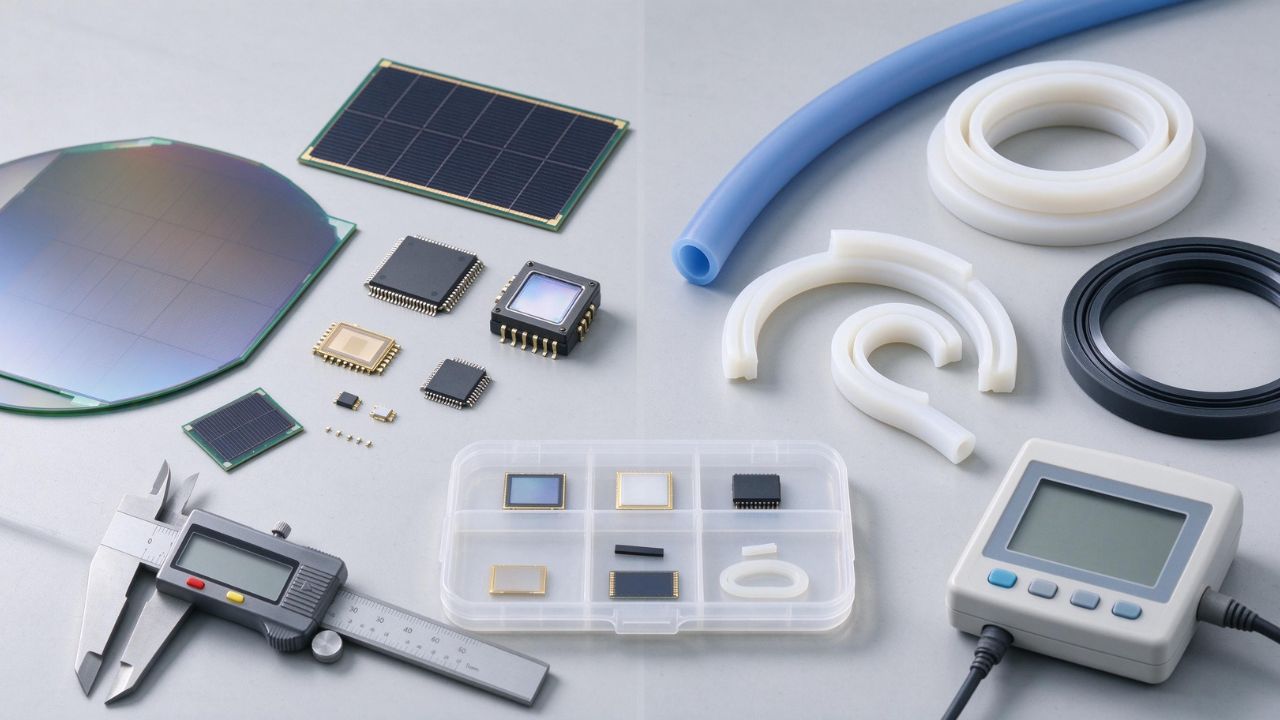
There is no inherent superiority or inferiority between the two materials. The appropriate choice depends on the product functions, operating environment, and product design you require.
However, if you clearly define your application field, you can generally determine whether to use silicon or silicone. You would not use silicone for designing power semiconductors, nor would you choose silicon as the raw material when manufacturing food-grade kitchen molds. Nevertheless, in some gray areas – such as medical devices, flexible electronic products, and sensors – you may have difficulty making a decision.
Therefore, when choosing whether to use silicon or silicone for your industrial parts, you can adopt the following key decision factors:
- Do You Need Semiconductor or Controlled Electrical Properties?
Silicon is widely used when controlled electrical behavior, semiconductor properties, or photovoltaic performance is required; conversely, Silicone is commonly selected when electrical insulation is required together with flexibility, weather resistance, or temperature resistance.
- Do You Need Flexibility, Compression Set Resistance, or Elastic Recovery?
If you need your product to have flexibility, compression set resistance, or wide temperature range elasticity, it is recommended that you choose silicone, as it can provide continuous service over a wide temperature range, with the actual operating range depending on the formulation and application, while silicon is hard and brittle.
- Do You Need Direct Contact with Food or Equipment Related to the Medical Industry?

If your product needs to come into direct contact with food or medical equipment, then you can select a grade specifically intended for the application and verify the applicable regulatory or testing requirements. Depending on the end use, documentation may include FDA-related compliance information, USP Class VI testing, biocompatibility data, or other application-specific requirements.
- Is High Thermal Conductivity Necessary?
If your product requires high thermal conductivity, then either silicon or silicone can be chosen. However, you should note that although the thermal conductivity of silicon is better than that of silicone, it is brittle, while silicone has heat insulation properties; when mixed with substances such as zinc oxide, its heat insulation performance will decrease. Therefore, in terms of requiring high thermal conductivity, you can choose based on your needs.
| Requirements | Appropriate Materials |
| Semiconductor Performance | Silicon |
| Photovoltaic Applications | Silicon |
| Flexible Sealing | Silicone |
| Elastic Recovery | Silicone |
| Electrical Insulation | Silicone |
| High-temperature elastomeric sealing | Silicone |
| Rigid Electronic Components | Silicon |
| Flexible Tubing or Molded Seals | Silicone |
Note: For industrial parts, the choice is usually not between silicon and silicone alone. Once silicone is selected, you should further evaluate the silicone type, hardness, curing system, temperature range, chemical resistance, regulatory requirements, and manufacturing process.
FAQ
What Is the Difference Between Silicon, Silica, and Silicone?
| Feature | Silicon (Si) | Silica (SiO₂) | Silicone |
| Physical Form | Metalloid; typically a crystalline solid in elemental form | Hard, crystalline (in quartz form) or amorphous (in glass form) | Varies from liquid to gel to solid, depending on the polymer structure |
| Primary Applications | Semiconductors, solar cells, alloys | Glassmaking, ceramics, construction (as a concrete and mortar component), desiccants | Medical devices and implants, cookware, sealants, lubricants, cosmetics, and personal care products |
| Key Properties | Semiconducting, heat-resistant | Hard, chemically stable, high melting point | Flexible, heat-resistant, chemically stable, water-repellent |
| Health & Safety | Generally safe, with precautions for dust during manufacturing | Inhalation of crystalline silica dust can cause silicosis, regulated exposure | Biocompatible, generally considered safe, concerns mainly around long-term implantation effects |
| Environmental Impact | Abundant, but mining and refinement processes have environmental impact | Natural, but dust and fine particles can cause air and water pollution | Not biodegradable; recycling is challenging but possible |
| Recyclability | Recyclable through specific processes | Limited recyclability, often reused or repurposed | Can be recycled, though not as straightforward as more common materials like plastics or metals |
How Does Silicon Become Silicone?
Silicon is processed into silicone through chemical methods. Firstly, pure silicon is extracted from a large amount of quartz containing silicon dioxide. Then it is mixed with chloromethane to form methyl chlorosilane compounds. Subsequently, these compounds undergo hydrolysis treatment and are further processed into silicon oxide intermediates and silicone polymer materials. Finally, through various cross-linking processes, various silicone fluids, elastomers, gels and resins can be produced.
Can Silicone Products Be Recycled?
Although silicone can be recycled, it is not as easy to recycle as common materials such as plastic or metal. This is because silicone is a thermosetting material that is not biodegradable and must be sent to specialized recycling facilities for proper decomposition and reuse. However, compared to plastic materials, silicone is more durable in the long term and does not release harmful chemicals.
How to Clean Silicon and Silicone?
Due to the differences in chemical structure and physical properties, different methods are required for cleaning silicon and silicone.
Silicon needs to be cleaned in a clean room and passivated with deionized water, while silicone can be cleaned with a neutral cleaner, but it needs to be thoroughly dried after being cleaned at high temperature.
Can Industrial Silicone Be Injection Molded the Same Way as Thermoplastics?
Yes, silicone can also be injection-molded, but it has a fundamental difference from the injection molding process of plastics. Thermoplastic materials need to be heated to a molten state during the injection process and then cooled and solidified in the mold. However, liquid silicone rubber needs to be kept at a low temperature during the injection process and solidify in a heated mold.
Is Silicone Rubber the Same as Silicone?
No, silicone rubber and silicone are not the same. Silicone refers to all polymer materials whose main component is siloxane, and they can be made into various forms of products. Solid-state silicone rubber is just the most widely used subcategory within this category. Other forms of silicone include silicone resin, silicone oil, and silicone gel.
Final Thoughts
The different chemical structures of silicon and silicone result in significant differences in physical properties, thus leading to clear application scopes. Contact us if you are looking for a reliable silicone products supplier. NICEONE will customize a solution and provide a detailed quotation for you.