Silicone bottle sleeves are one of the most popular accessories for products such as thermos bottles, water bottles, and glass bottles. The production process of silicone bottle sleeves directly affects the quality of the product. This article will introduce the production process of silicone bottle sleeves from the perspective of manufacturers and help you choose a suitable silicone bottle sleeve solution.
What Are Silicone Bottle Sleeves?
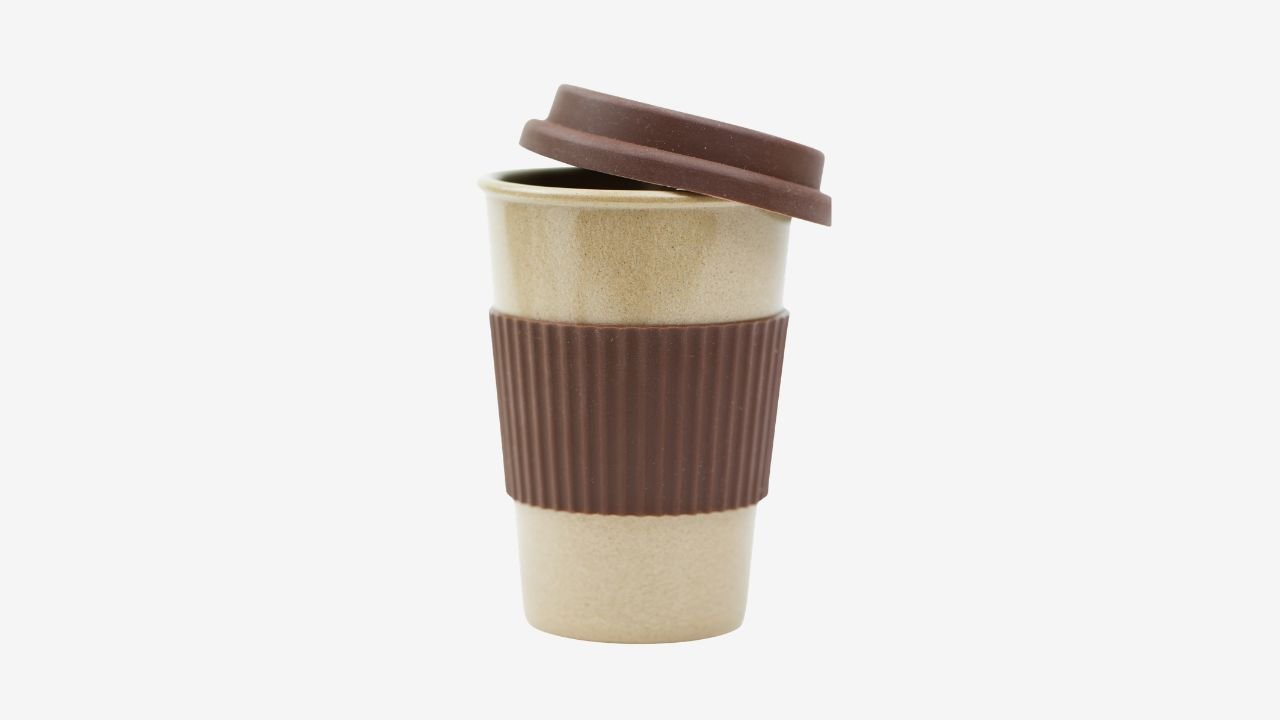
A silicone bottle sleeve is a cylindrical protective sleeve made of silicone as the raw material. It is usually placed on the outer wall of products.
Silicone bottle sleeves are available for different bottle types, including glass bottles, water bottles, and baby bottles. They can reduce heat transfer, improve grip, provide impact protection, cushioning, and shock absorption, as well as protect the bottle body. The use of silicone bottle sleeves can help you enhance the comfort of product use and their lifespan.
For example, silicone sleeves for glass bottles can protect the surface of glass bottles from daily scratches and impacts, while silicone water bottle sleeves will give your products a better grip and additional surface protection for reusable bottles.
You can also customize the silicone sleeve for bottle dimensions, hardness, colors, and surface finishes to match specific bottle designs.
Manufacturing Process Of Silicone Bottle Sleeves
The production of silicone bottle sleeves involves many different processes. Every process has a critical impact on the quality of the finished product. If you want to design the most suitable product for you, studying the production process of silicone bottle sleeves in advance can be helpful.
Product Design
The product design is the most important stage in the production process of silicone bottle sleeves. Product design directly affects the production and quality of the product. In the product design phase, you need to communicate with the supplier to confirm information such as product size, wall thickness, surface texture, logo, and installation method.
The size of the silicone sleeve for bottles depends on the product. Before manufacturing silicone bottle sleeves, you need to confirm the diameter, height, taper, and other relevant geometry of the bottle. Then, based on this, you should determine the inner diameter, length, and opening method of the bottle sleeve. Accurate design of product can help you avoid time and cost losses caused by repeated modifications in the later stages.
In addition to nominal dimensions, you should confirm dimensional tolerances, wall thickness, and the required fit between the sleeve and the bottle. For custom projects, prototype fitting tests will help you identify issues, such as excessive installation force, loose fitting, or uneven sleeveage before production tooling is finalized.
Material Selection

Silicone has multiple grades and hardness levels. The choice of silicone material directly determines the performance and price of the bottle sleeve. Choosing the right silicone material can improve the quality of your products.
In most cases, the supplier will provide you with certification documents related to the materials for your confirmation. You mainly need to check the material’s grade, hardness, and weather resistance.
Grade
Silicone materials are available in different formulations and grades for applications such as industrial components, food-contact products, infant products, and medical devices. The appropriate material should be selected according to the product’s intended use, performance requirements, and applicable regulatory requirements.
If your bottle silicone sleeve is used for food contact, we recommend that you confirm the regulations of the target market and intended use. Select food-grade silicone and infant-grade silicone according to different needs. You should ask the supplier to provide you with relevant material documents and test reports to verify compliance.
If the bottle sleeve is used only as an external protective accessory, a suitable general-purpose silicone formulation may be sufficient.
Hardness
Silicone hardness is commonly specified using the Shore A hardness scale. You should choose silicone with different hardness according to different product types. Silicone hardness should be selected according to the sleeve’s geometry, wall thickness, desired flexibility, and fit requirements.
Softer silicone may improve flexibility of products and make installation easier, while harder formulations may provide greater structural support. The appropriate Shore A hardness should be confirmed through prototype testing.
| Silicone bottle sleeve type | Shore A | Characteristic |
| Full-Coverage Bottle Sleeve | 35-40A | Easy to open and assemble, not easily permanently deformed after repeated disassembly and assembly, while also providing cushioning and anti-fall protection |
| Partial-Coverage Bottle Sleeve | 38-42A | Balance hand feel and structural stability |
| Bottle Base Protector | 40-45A | The bottom needs to be impact-resistant, with slightly higher hardness, and does not require significant stretching |
Color And Weather Resistance
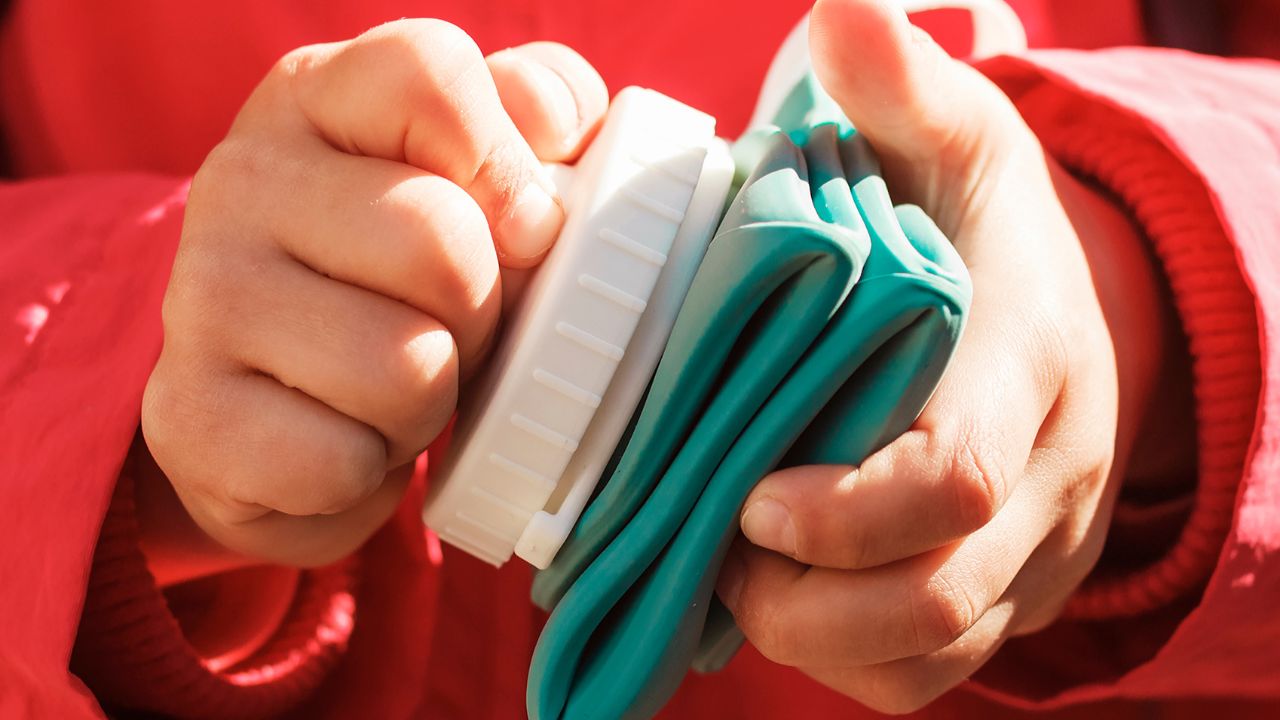
Silicone compounds can be formulated or pigmented in different colors according to your needs. It should be noted that if the main application scenario of the product is outdoor, it is recommended that you choose UV-resistant and anti-yellowing silicone materials.
Mold Design
The design of the mold is the most critical step in the production process of bottle sleeves, which directly affects the production cost and product quality.
When designing a mold, it is necessary to determine the position of the parting surface, the material loading or feeding method, and the exhaust groove to ensure that the silicone can fill the mold cavity. At the same time, when designing the mold, it is necessary to reserve a suitable demolding slope to facilitate removal after molding.
Mold design also affects parting-line marks, flash formation, and air entrapment. The parting line, venting layout, and feeding system should be evaluated together based on the product geometry and selected molding process. Proper mold design can reduce unnecessary rework, increase output, and improve product consistency.
Molding
Molding is an important process of manufacturing silicone bottle sleeves. There are two common molding processes for silicone products, namely solid silicone compression molding and liquid silicone injection molding. You should choose one process based on your own needs.
Solid Silicone Compression Molding
Solid silicone compression molding refers to mixing silicone material and placing it into the molds, and then pressing and vulcanizing it at high temperature to form.
The mold cost for this molding method is relatively low. It is suitable for silicone bottle sleeves with relatively simple structures. It is usually used for both small-batch and larger-volume production. If your budget is not high and the product design is relatively simple, then it is a good choice.
Liquid Silicone Injection Molding
Liquid silicone injection molding involves mixing two sets of liquid silicone, A and B, in proportion. Then they are injected into the mold and rapidly vulcanized at high temperatures to form.
This molding method has high precision, making it suitable for thin-walled, complex structures, and large-scale production. However, the equipment and mold costs for liquid silicone injection molding are higher. Before making a choice, you had better evaluate the cost and confirm whether this process meets your budget.
During molding, temperature, pressure, and curing time must be controlled according to the silicone formulation, part geometry, and selected process. Inadequate process control may cause air entrapment, incomplete curing, flash, or dimensional variation. Therefore, the selection of suppliers is particularly important, and you need to evaluate their production capacity before choosing a supplier.
Demolding
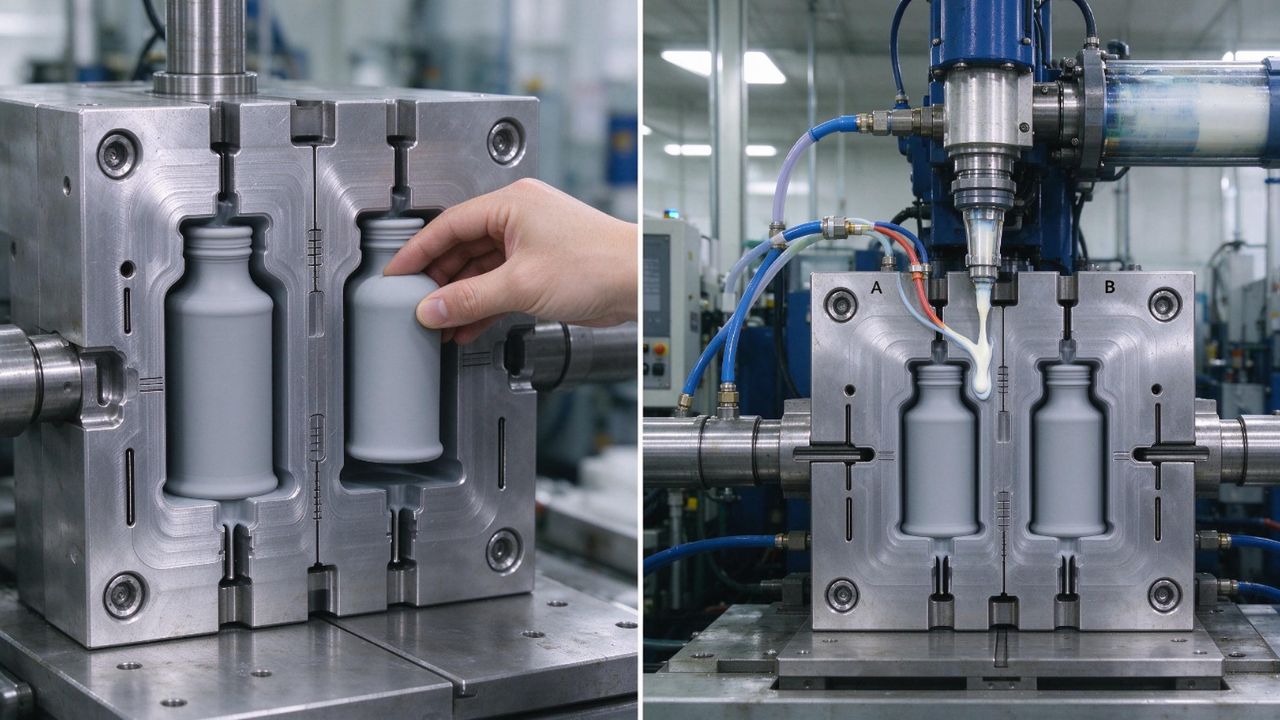
After the silicone vulcanization is completed, the supplier will demold the product. Cylindrical bottle sleeves may experience deformation during the demolding process. During the demolding process, it may use draft features, mold-release treatment, or mechanical/pneumatic ejection depending on the mold and material.
Post-Processing
The edge of the bottle sleeve after demolding usually has flash. So, demolding is not the last step in the production of silicone bottle sleeves. After demolding, the bottle sleeve needs to be trimmed, and then surface-treated and printed according to the design requirements.
Common post-processing procedures include surface finishing where required, logo printing, cleaning, and packaging.
For customized silicone glass bottle sleeves, post-processing requirements should be confirmed before mass production. Logo printing, surface finishing, and trimming will affect the appearance, consistency, and production cost of the products. Any special requirements for color matching, surface texture, or printed-logo durability should be verified on approved samples.
Quality Inspection
Suppliers usually conduct quality inspections before products leave the factory, mainly including dimensional inspection, appearance inspection, performance testing, and compliance testing. A reliable supplier can provide you with inspection reports, material documentation, and applicable compliance documents.
For customized orders, you should agree on critical dimensions and test methods before mass production.
| Inspection Item | What You Should Verify |
| Dimensional Inspection | Bottle fit, critical dimensions, and agreed tolerances |
| Appearance Inspection | Flash, bubbles, contamination, incomplete filling, and surface defects |
| Hardness Testing | Whether the product meets the agreed Shore A specification |
| Mechanical Testing | Tear resistance or other mechanical properties when required |
| Fit and functional Testing | Installation force, retention, slippage, and actual bottle compatibility |
| Compliance Documentation | Whether test reports and declarations match the material, product, and intended market |
How To Choose Silicone Bottle Sleeves?
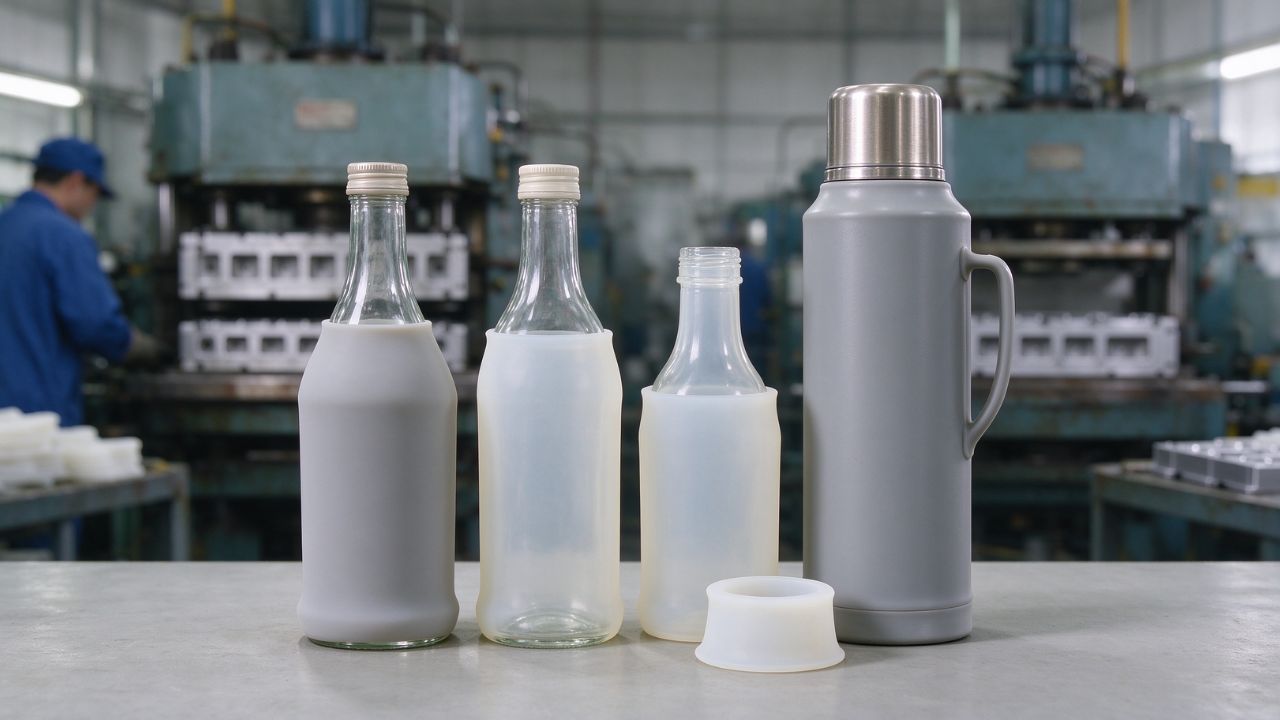
If you want to choose silicone bottle sleeves for your product, you had better consider many different aspects, such as size, material, and durability. The following content can give you a simple reference when you are choosing silicone bottle sleeves.
Bottle Size
When sourcing a silicone sleeve for water bottles, you need to pay attention to the size of the bottle. The inner diameter of the bottle sleeve must match the diameter of the bottle body.
If the inner diameter of the bottle sleeve is too large, it will cause it to loosen and slide off. If its size is too small for the bottles, it will be difficult to fit the bottles. Therefore, when you are purchasing or customizing silicone bottle sleeves, you need to provide the supplier with the precise size of the bottle.
The elasticity of silicone can accommodate a certain tolerance range, but when the difference is too large, the fit and feel will be affected.
Silicone water bottle sleeves or silicone glass water bottle sleeves should have a secure fit and be easy to install or remove. If your products are glass water bottles, the design of the sleeve should also consider the shape of the bottle and the required level of protection.
Material Requirements
You should confirm if there are any special material requirements for the bottle sleeve, such as food-grade materials, high-temperature resistance, or UV resistance, etc.
- If your silicone bottle sleeves come into contact with beverages or need to come into contact with the mouth, then you must use food-grade silicone. If your product is silicone baby bottle sleeves, you should choose a safer material. You’d better choose a supplier who can provide relevant food-contact compliance documentation and test reports.
- If your product is mainly used outdoors, such as silicone bottle sleeves for travel, then you need to consider its resistance to yellowing and UV resistance.
- In low-temperature or high-temperature scenarios, you need to confirm the working temperature range of the material. For a glass bottle silicone sleeve, the selected silicone compound should meet the required durability, temperature range, and environmental resistance for its intended application.
Production Volume
The production volume of silicone bottle sleeves determines the selection of molds and specific process plans.
If you are doing small-scale sampling or trial production, you can choose single-hole molds to reduce upfront investment. If you want to mass-produce silicone bottle sleeves, we recommend choosing multi-hole molds or liquid silicone injection molding.
Some suppliers have MOQ requirements, so it is best to have detailed communication and confirmation with the supplier before ordering silicone bottle sleeves.
Durability
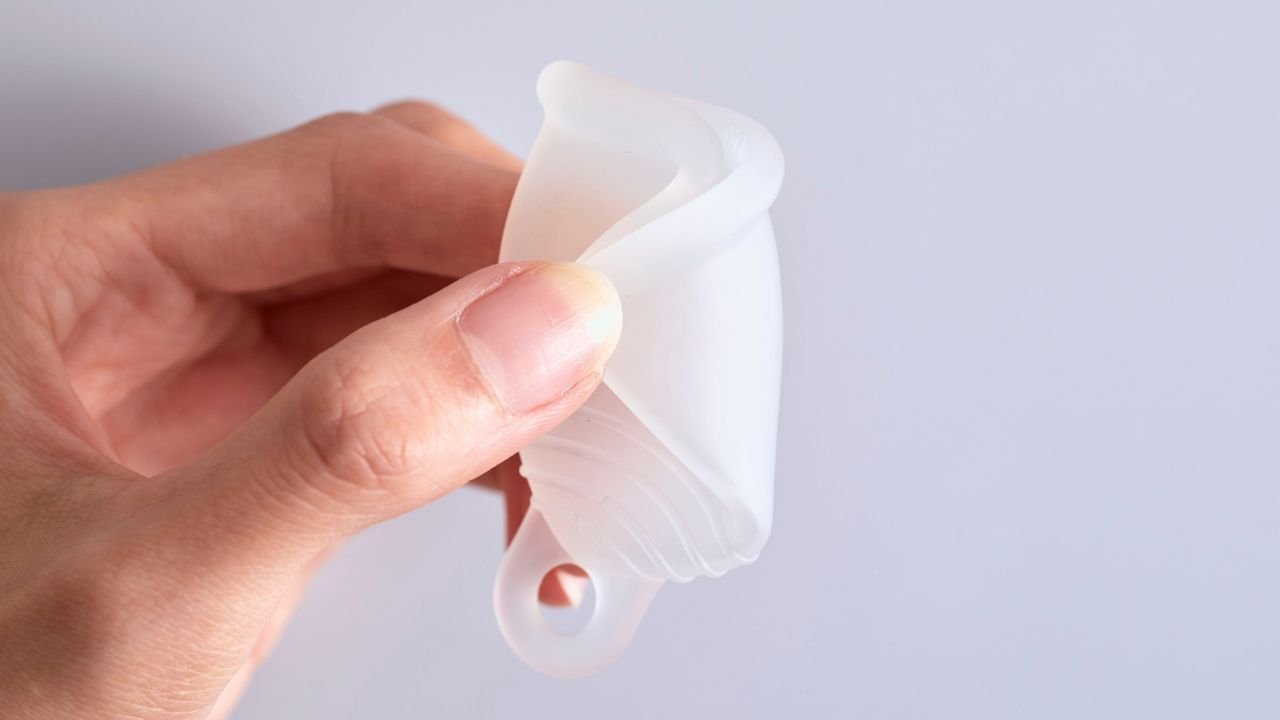
When designing and selecting silicone bottle sleeves, you need to consider the durability of the bottle sleeve and choose silicone bottle sleeves with high durability as much as possible.
Silicone bottle sleeves may face problems such as repeated disassembly, dropping, friction, and long-term exposure to sunlight in practical use. If it is a water bottle sleeve for daily commuting, more attention should be paid to tear resistance and wear resistance. If you want the bottle sleeve to achieve long-term use without yellowing, you should choose materials with good UV resistance and oxidation resistance.
It should be noted that the higher the durability requirements for silicone bottle sleeves, the higher the material grade and wall thickness, and the higher the cost.
Manufacturing Process
Solid silicone molding and liquid silicone injection each have their own advantages, and you need to choose according to your own needs. Process selection can affect mold costs, unit prices, and delivery times.
If you are unsure how to choose, you can ask the supplier to provide a comparative plan based on your product structure and output.
FAQ
How Long Can A Silicone Bottle Sleeve Last?
The service life of silicone bottle sleeves is affected by factors such as raw material quality, usage, maintenance, wall thickness, and hardness design.
- Raw material quality: The quality of raw materials directly affects the service life of finished products.
- Usage: If it undergoes frequent water-boiling disinfection, outdoor exposure, and repeated vigorous pulling and disassembly, its aging rate will accelerate.
- Maintenance situation: If the bottle sleeve is in long-term contact with oil stains and disinfectants, it will also accelerate its aging.
- Wall thickness and hardness design: Generally speaking, products with low hardness and thin wall thickness are more prone to deformation and have a shorter service life.
What Method Can Be Recommended For Customers To Clean Silicone Bottle Sleeves?
High-quality silicone does not absorb stains, has a waterproof surface, and is easy to clean. You can briefly explain to the customer the cleaning method for silicone bottle sleeves. In daily use, simply rinse it with warm water and neutral detergent. Due to its high temperature resistance, it can also be cleaned and steam-disinfected with boiling water. The specific temperature range depends on your material.
It is not recommended for customers to use highly corrosive disinfectants and steel wire balls to clean silicone bottle sleeves. Highly corrosive disinfectants and steel wire balls can damage the surface of silicone bottle sleeves, causing them to turn white and have a worse hand feel.
How To Test The Fit Of Silicone Bottle Sleeves?
The assembly testing of silicone bottle sleeves is the most important testing step in the customized production of silicone bottle sleeves. This step cannot be judged solely based on the dimensions of the drawings. It must be tested with physical objects.
Generally speaking, assembly testing usually includes disassembly and assembly testing, fit inspection, drop simulation testing, and temperature testing. Through assembly testing, product quality is guaranteed, and it can help you avoid risks and unnecessary losses in advance.
Why Do Silicone Bottle Sleeves Have Bubbles Or Surface Defects?
If there are surface defects such as bubbles, dents, and dirt on the silicone bottle sleeve. Common reasons include the following aspects.
- Insufficient mold exhaust: If the design of the mold exhaust groove is unreasonable, the internal air cannot be discharged during silicone vulcanization molding, which will form air entrapment, voids, or surface defects.
- Surface condition of mold cavity: If the mold cavity is not polished properly or there is dirt residue on the mold surface, defects may form on the product surface.
- Operational issue: In the actual production process, if air is introduced during solid-state molding feeding, or if dust control in the production workshop environment is not in place, it can also cause appearance defects.
Are Silicone Rubber And Plastic The Same Material?
No, the molecular structure and physical properties of silicone and plastic are completely different.
Most plastics belong to thermoplastic materials, which are formed by heating, melting, cooling, and shaping. However, ordinary plastics have limited temperature resistance and are prone to deformation at high temperatures.
Silicone belongs to elastic rubber, which undergoes a vulcanization crosslinking reaction during molding and will not melt even after heating. It has the characteristics of high elasticity, high and low temperature resistance, anti-aging, and can be boiled and steam sterilized.
Many people confuse TPR/TPE soft plastic with silicone. TPE/TPR is a thermoplastic elastomer, essentially a modified plastic, with a significant performance gap compared to silicone rubber.
Is The Softer The Silicone Bottle Cover, The Better The Buffering Effect?
No, the cushioning effect of the bottle sleeve is determined by its hardness, wall thickness, and structure. Softer silicone may not necessarily provide better cushioning.
If the hardness of the silicone is too low, although it feels soft, the material’s resistance to tearing and deformation decreases. When impacted, it is prone to excessive compression and cannot effectively absorb the impact force. After repeated disassembly and assembly, this silicone sleeve will undergo permanent tensile deformation, causing the bottle sleeve to loosen and lose its cushioning protection ability.
Silicone bottle sleeves need to strike a balance between hardness and structural strength.
Final Thought
The manufacturing process of silicone bottle sleeves is interrelated. From design to demolding, any problem at any stage can affect the quality of the product. NICEONE has been engaged in the research and production of silicone products for many years. If you want to purchase high-quality silicone bottle sleeves, please feel free to contact us. We can design a customized production plan for you based on your needs.