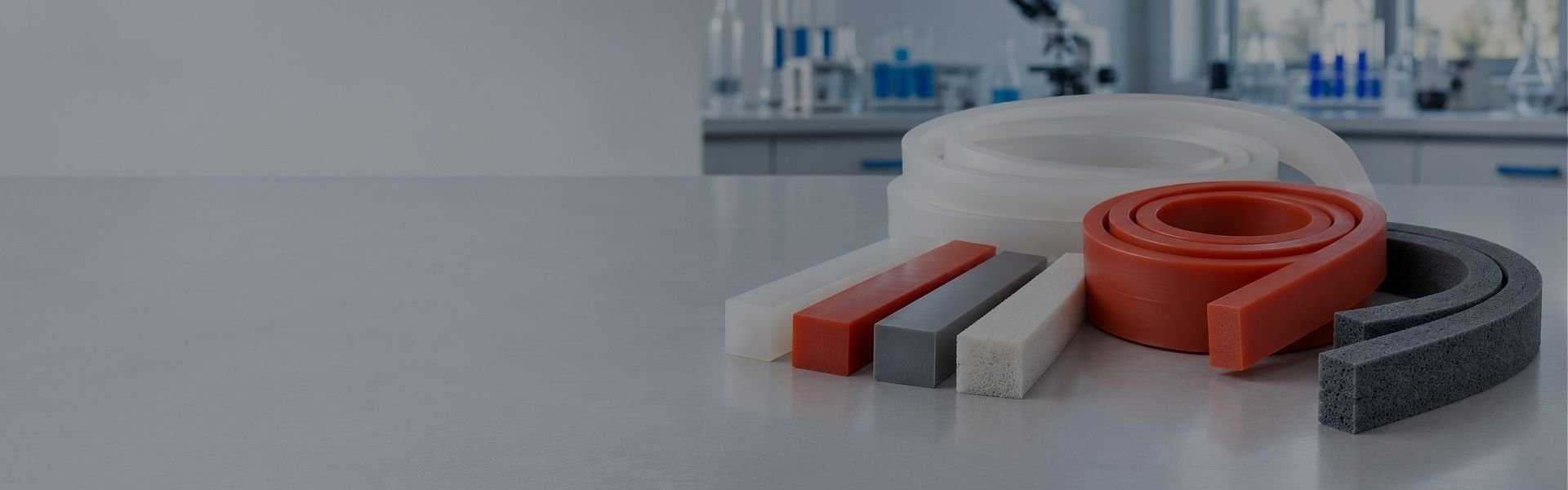
Silicone Strip Supplier
Niceone silicone strips feature excellent flexibility, resilience and temperature resistance, and can provide you with a stable sealing effect even under compression, bending and repeated usage. With good UV resistance, ozone resistance and electrical insulation properties, they are widely applied for equipment sealing, waterproof and dustproof protection, buffering, isolation and edge protection.
We support common cross-sections such as circular, square, rectangular, D-shaped, P-shaped, U-shaped, T-shaped. Meanwhile, Niceone can also develop special cross-sections according to your installation slots, sealing gaps and compression spaces. The width, thickness, hardness, length and color of the product can be adjusted and continuous extrusion, fixed-length cutting, closed-loop joining and special structure processing are supported.
Whether it is a high-performance sealing strip for industrial equipment and aerospace, or a high-cleanliness silicone strip for food and medical equipment, we can provide customized solutions for you. Contact Us now!
Our Silicone Strip Products by Structure
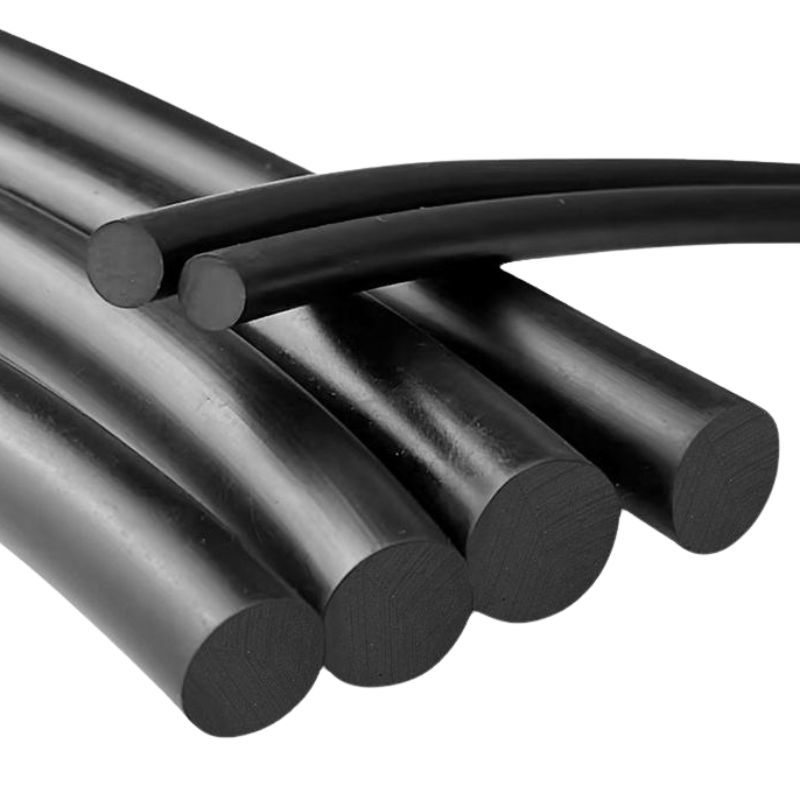
Engineered with high-density solid silicone compound, it is the most commonly used type. You can choose 20 to 80 Shore A.
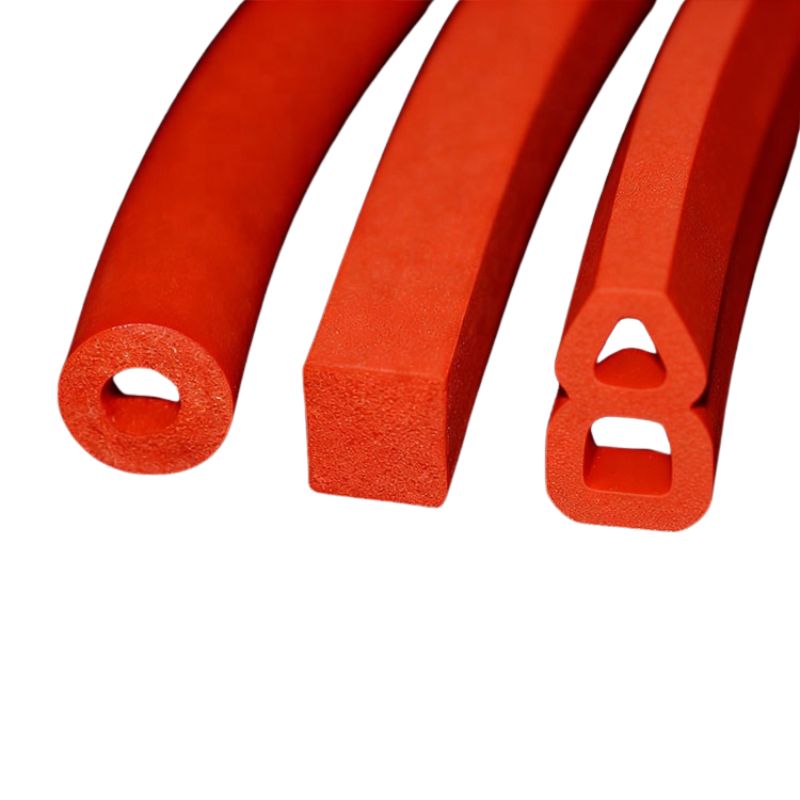
Features porous silicone structure with a lower density and compression force than the solid silicone strip. Suitable for filling large gaps, buffering, and low compression force sealing.
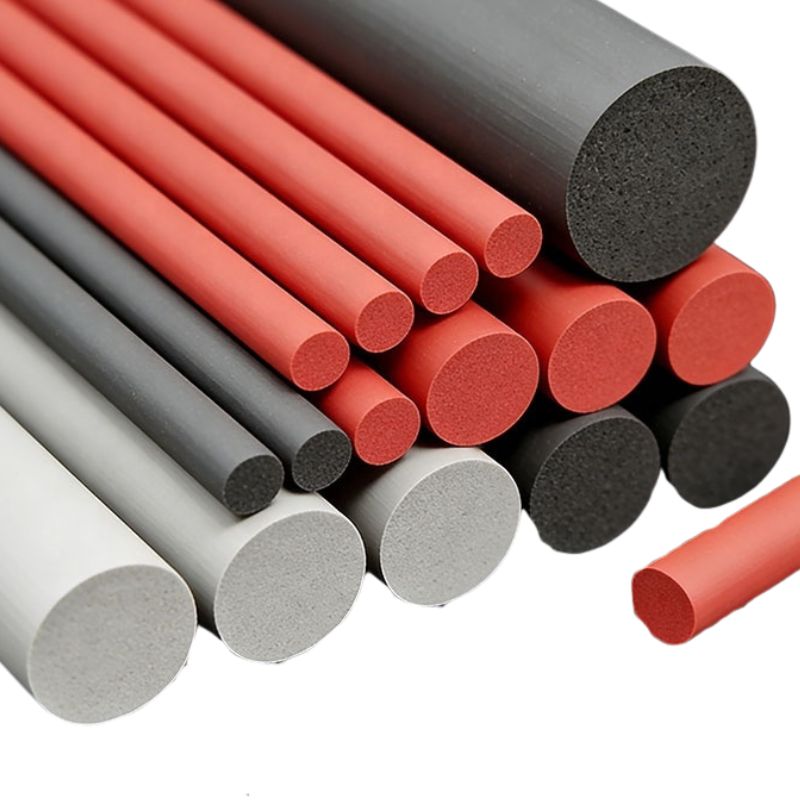
Closed-cell foaming structure with independent internal air pores to provide better waterproof performance. Ideal for those requiring lightweight, large compression capacity or waterproofing.
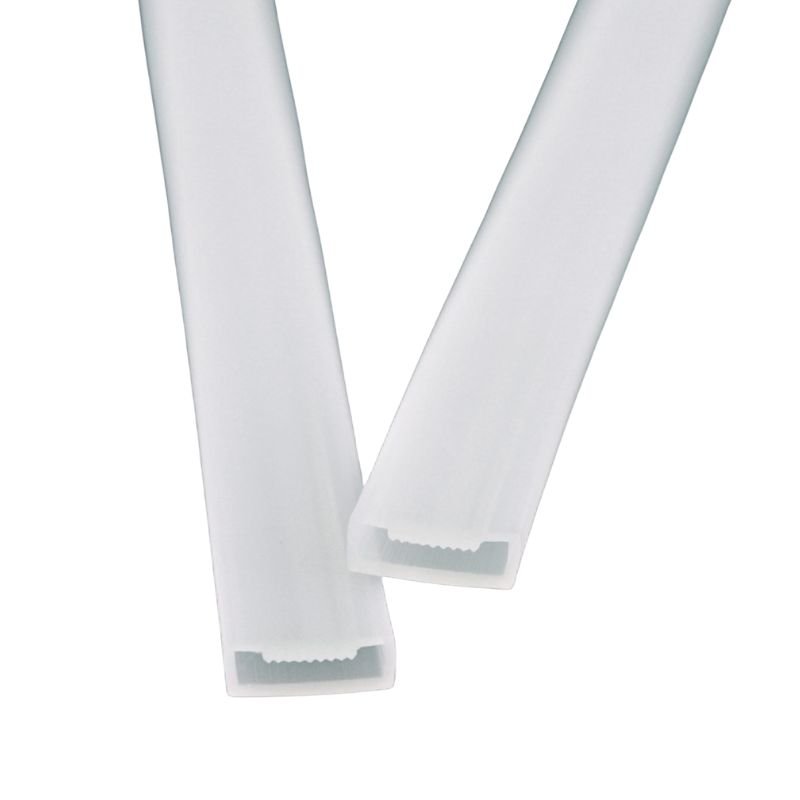
The exterior is made of dense silicone material, while the interior adopts a hollow cavity design. When compressed, the internal cavity can provide a larger deformation space for you.
Our Silicone Strip Products by Function
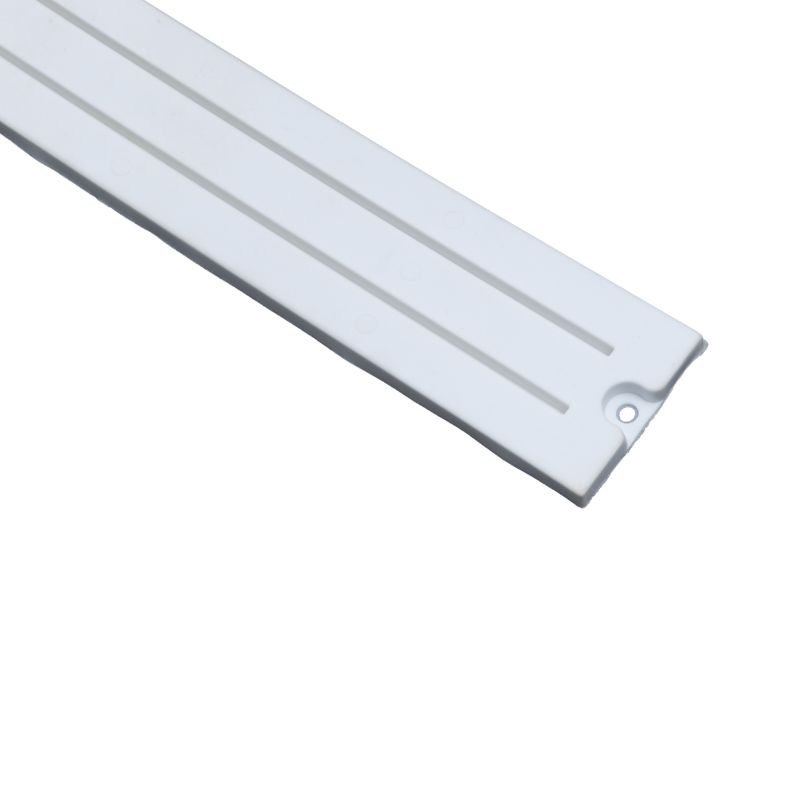
The sealing silicone strip is used to fill the gap between two components, helping to prevent water, air, dust from entering.
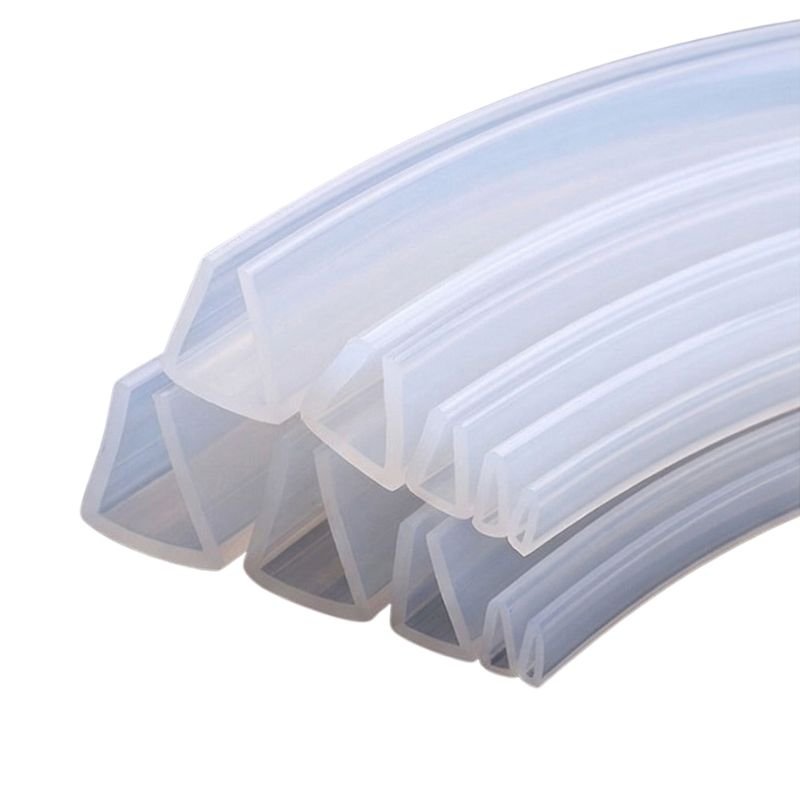
Protects metal, glass and plastic sheets’ edge, which can reduce collisions and friction. The slots width and depth can be adjusted according to your sheet thickness.
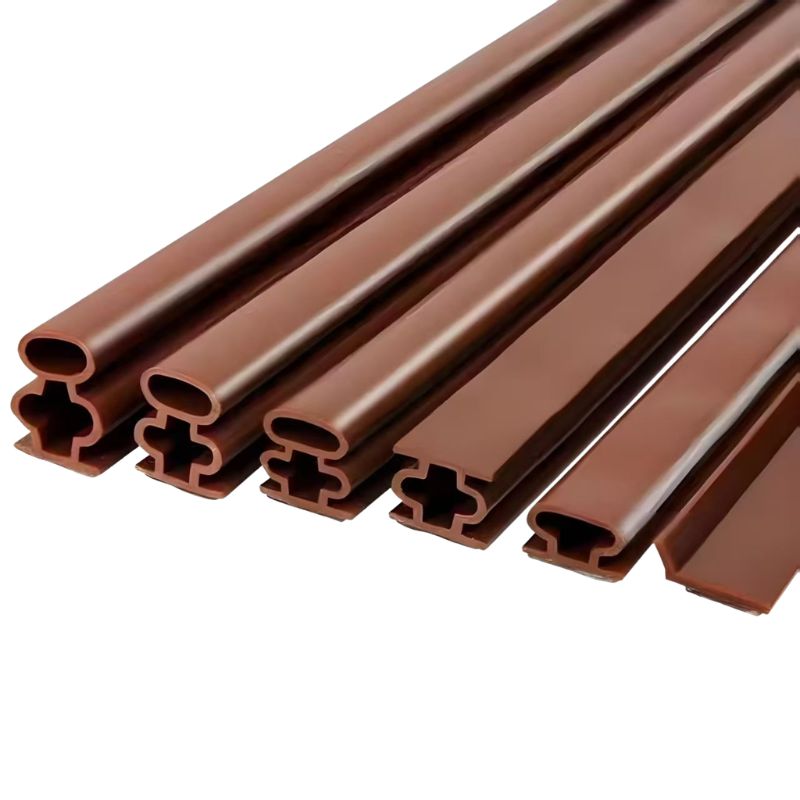
Delivers thermal insulation and heat protection around high-temperature equipment, such as ovens, heating equipment, and industrial machines. Withstands operating temperatures up to 260°C (500°F).
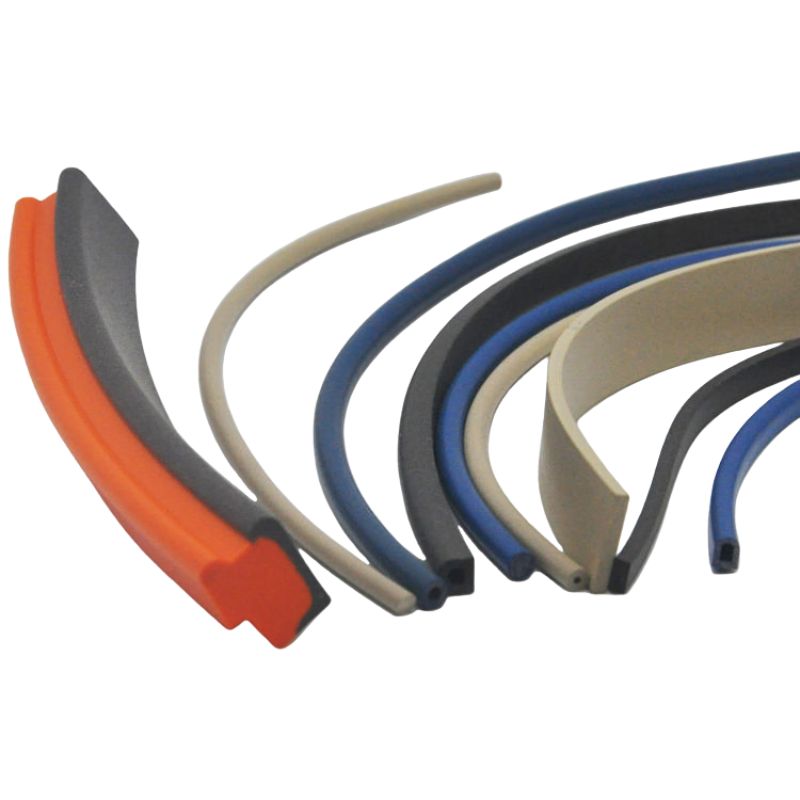
Achieves both conductive connections and electromagnetic shielding simultaneously in the sealing structure. Commonly found in electronic, electrical and communication equipment.
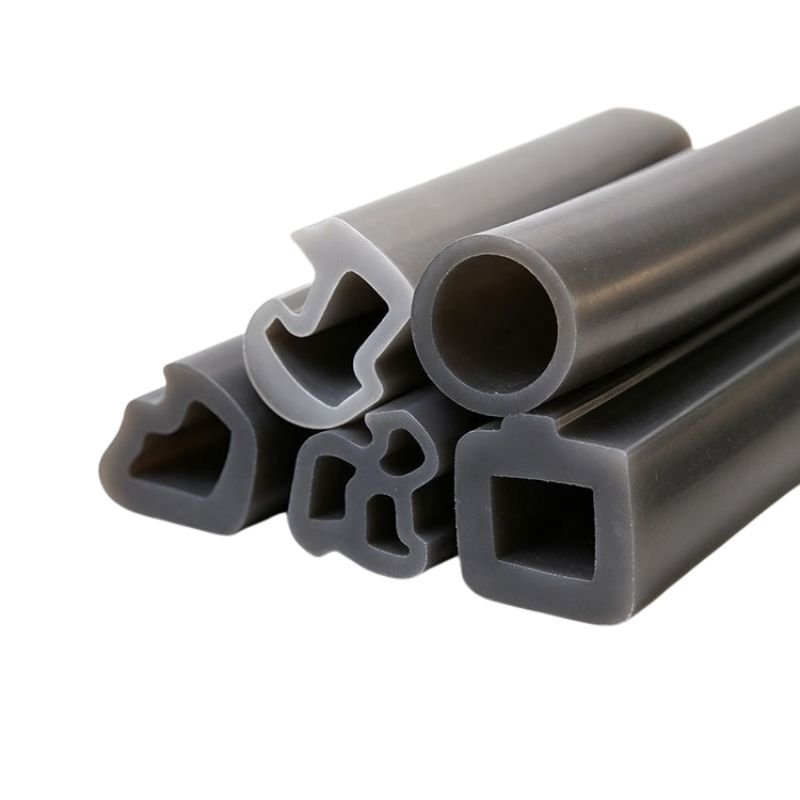
Using flame-retardant silicone material, it meets the UL 94 flame-retardant rating. Suitable for products such as electrical, electronic and industrial equipment that require flame retardancy.
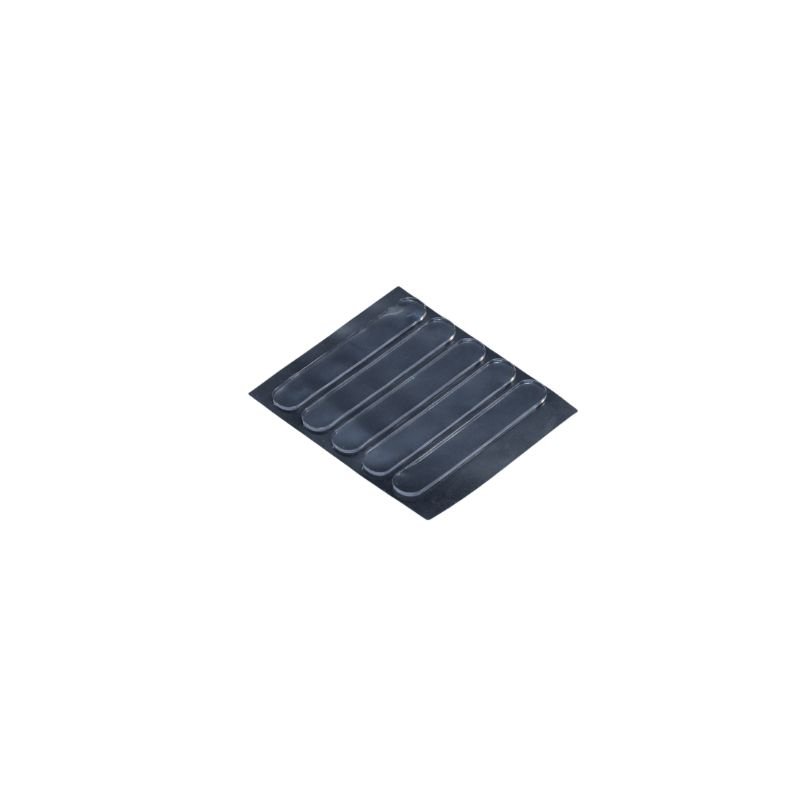
Add an adhesive layer, allowing it to be directly installed on metal, glass, plastic and other substrate surfaces. We provide you with different adhesive types.
Our Silicone Strip Products by Profile
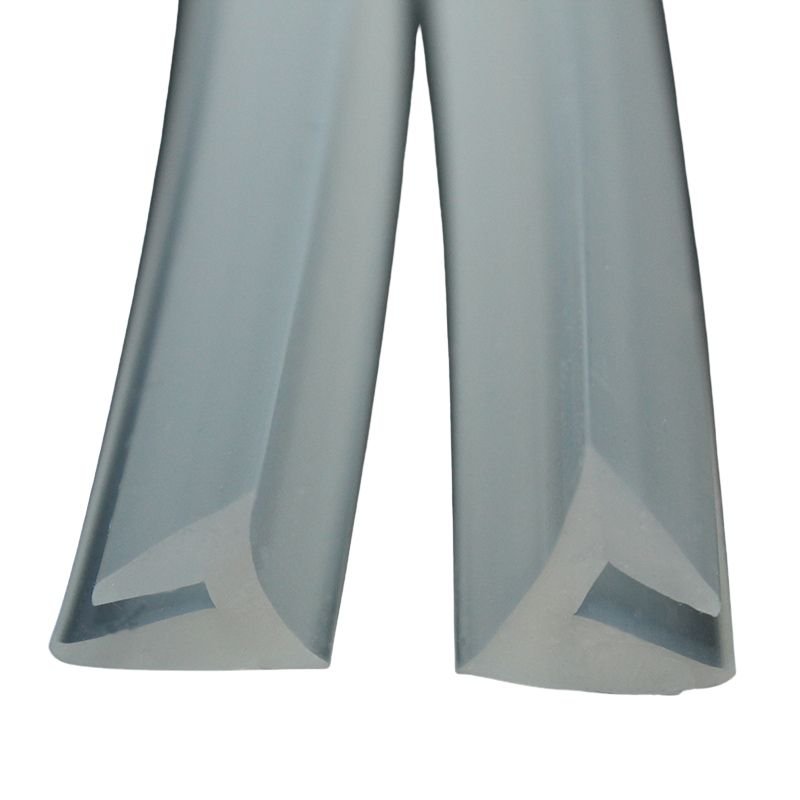
The U-shaped silicone strip features a slot. You can directly install it on the edges of metal, glass or plastic sheets.
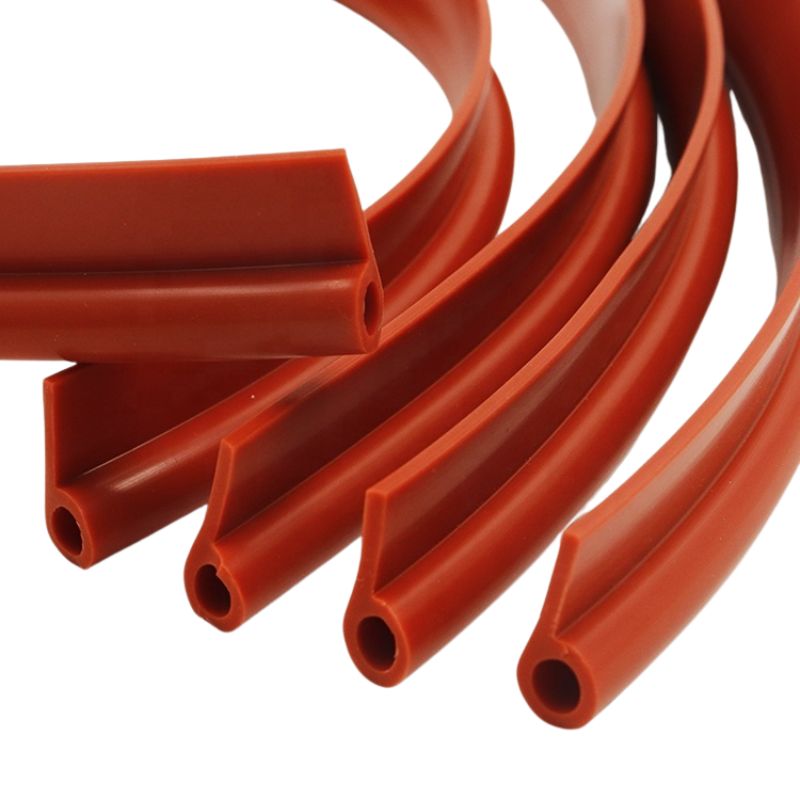
Features a hollow circular bulb with a flat mounting flange, enabling easy slide-in or press-fit installation with ultra-low compression force.
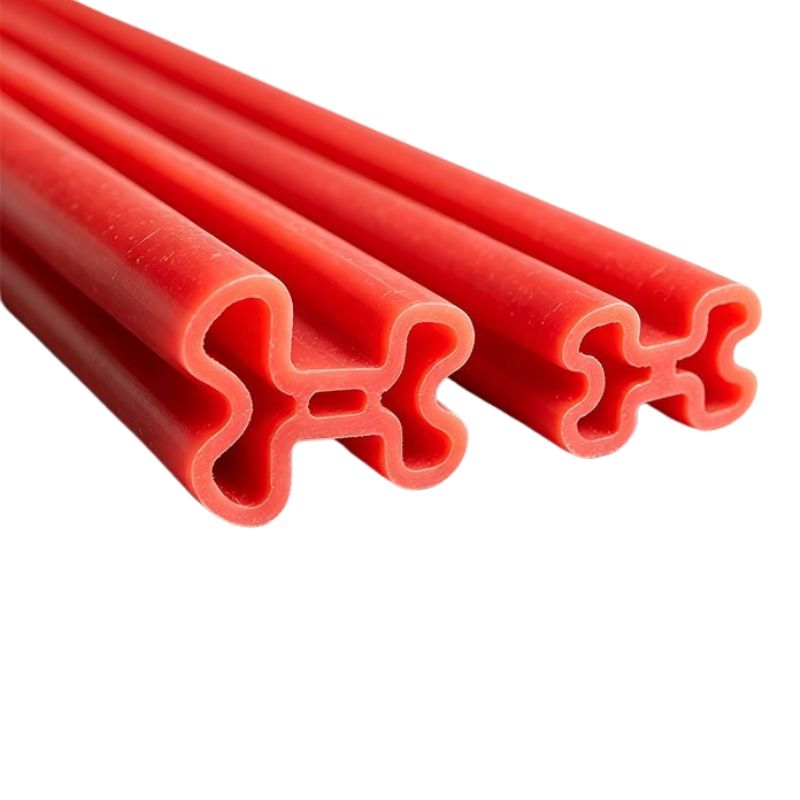
We can develop custom cross-sections based on 2D drawings, 3D files, or physical samples. Support customization of width, thickness, hardness, cross-sectional shape, length, and color.
Silicone Strip Key Advantages

It can bend, fold and fit into different product contours, suitable for irregular edges, narrow spaces and complex installation structures.

After being compressed, it can quickly restore original shape, maintaining stable contact with the sealing surface during long-term compression and repeated use.

Withstands extreme environments ranging from -65°F to +500°F. Easily handles environments with low temperatures, high temperatures, and drastic temperature fluctuations.

Our silicone strips can resist the erosion of many different harsh chemical substances, such as fuels, oils, and solvents, etc.

It does not crack, flake off or show significant aging even after long-term exposure to sunlight, rain, and outdoor conditions.

With a dense surface and low water absorption, it is resistant to oil and water stains, and easy to wipe down and clean, which saves your maintenance costs.

Features excellent electrical insulation properties and can be used in insulation, isolation and protective structures of electronic and electrical equipment.

In addition to sealing, our silicone strip can simultaneously perform functions such as waterproofing, dustproofing, buffering, heat insulation, insulation and edge protection.
Why Choose Our Silicone Strip?
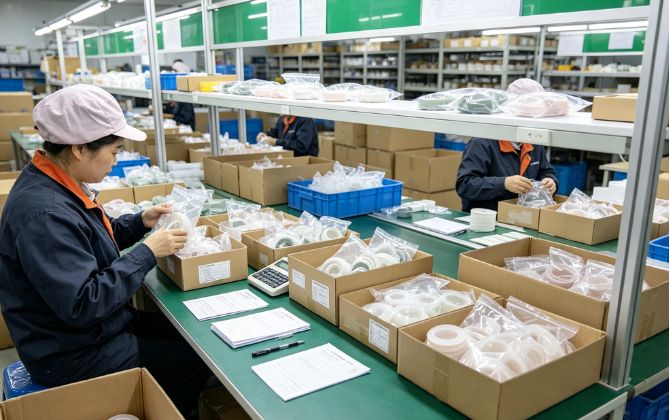
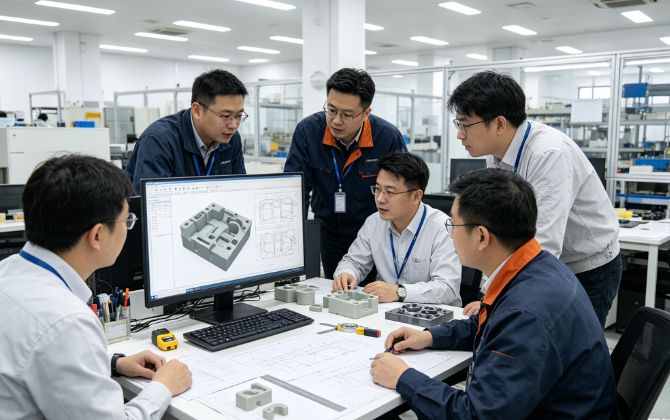
- Each of our silicone strips complies with strict industry standards. We can also offer relevant materials and compliance documents such as FDA, LFGB, RoHS, REACH, UL 94, etc. according to project requirements.
- The mold opening and sample production can usually be completed within 3-7 days and production is generally completed within 10-15 days. We closely monitor the production schedule throughout the process to ensure timely delivery.
- We will conduct full inspections or stratified sampling control based on your requirements. We strictly control the tolerance of key dimensions within ±0.1mm.
- From the material selection, section optimization, to sample testing and process adjustments during batch production, our dedicated engineering team provides you with 24-hour technical support.
Silicone Strip Applications
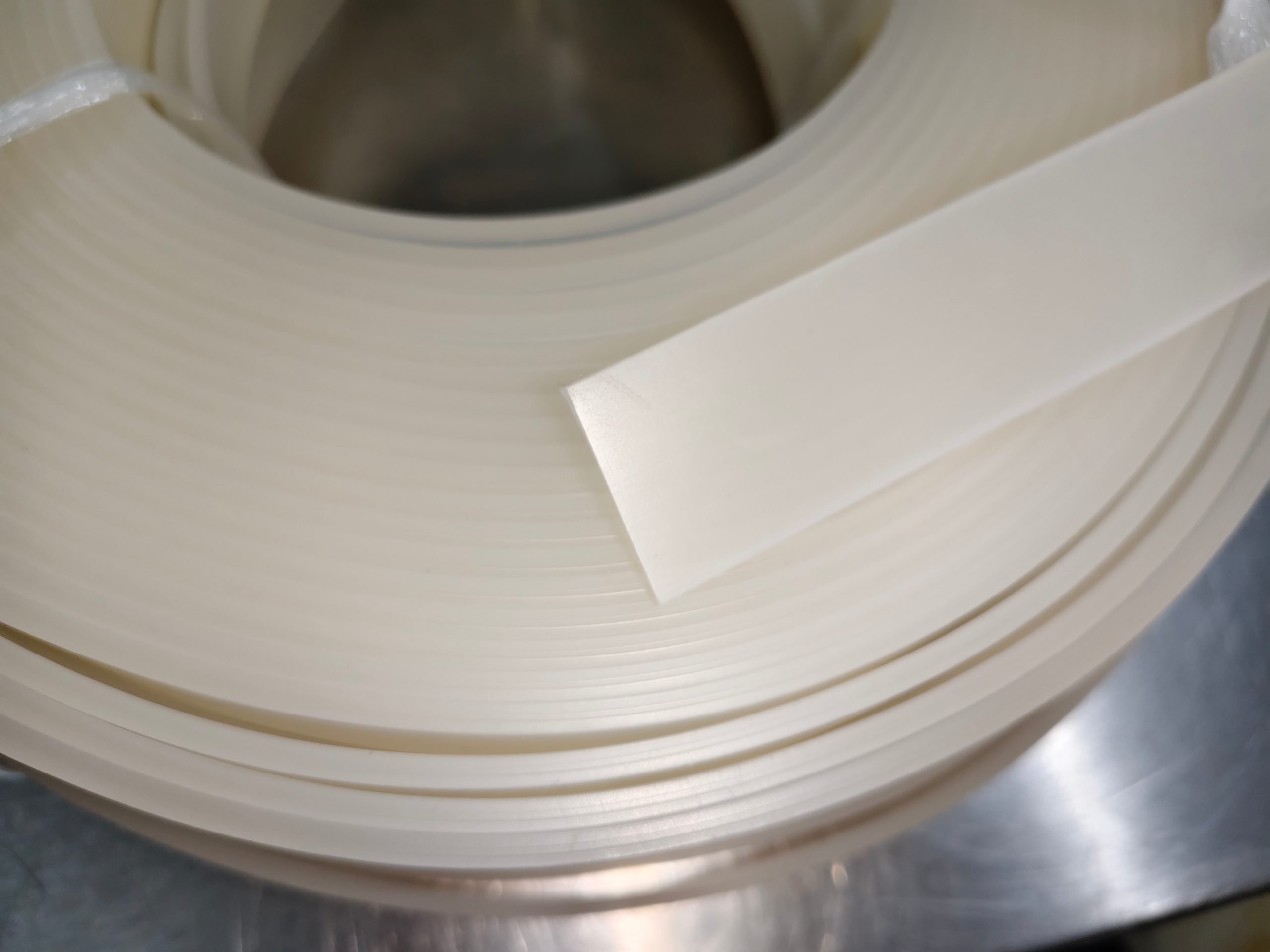
Niceone silicone strips can seal structural gaps against dust, moisture, and debris. They can be used in mechanical equipment, control cabinets, cabinets, equipment doors, enclosures and maintenance panels.

We can offer silicone strips with operating conditions ranging from -60°C to +230°C, ensuring reliable sealing throughout any flight stage. Commonly applied in cabin door sealing, equipment panels, electronic cabin shells, and maintenance access structures.
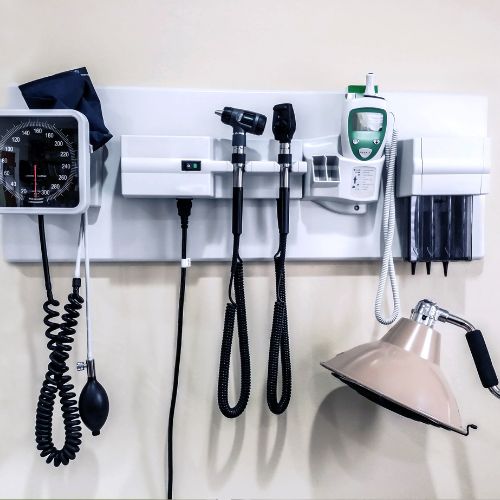
In addition to the sealing and flexible connectors for medical equipment shells, our silicone strip can also be used in fluid tubing. We can use platinum-cured silicone and ensure compliance with the relevant biocompatibility requirements such as ISO 10993 and USP Class VI standards.
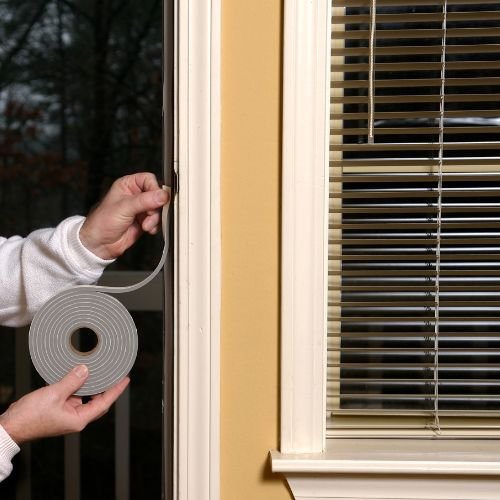
The silicone strips are used for sealing of door and window frames, glass curtain walls, aluminum profiles systems and industrial building structures. They can help you solve problems such as water penetration, air leakage and noise transmission.
Customization Options for Silicone Strip
| Parameter | Specification |
|---|---|
| Materials | Silicone |
| Structure | Solid / Sponge / Silicone Foam |
| Cross-section | Round / Square / D-shaped / P-shaped / Rectangular / Custom Shapes |
| Thickness | 0.5 mm to 70 mm (Customizable) |
| Width | 1 mm to 150 mm(Customizable) |
| Length | Available in Continuous Rolls or Cut to Specific Lengths. |
| Hardness | Shore A 20–80 |
| Color | Standard and Pantone Colors Available |
| Tolerance | ±0.1 mm |
| Surface Finish | Smooth, Matte, And Custom Textures |
| Installation Methods | No Adhesive Backing, PSA, Or Groove-Embedded Installation |
| Certification | FDA, LFGB, RoHS, REACH, UL 94, etc. |
Silicone strips offer good resistance to high and low temperatures, ozone, UV radiation, and aging. It is suitable for high-temperature, outdoor and applications with high requirements for material cleanliness.
EPDM strips have better resistance to water, steam and ozone. It is usually more suitable for doors, windows, water systems and outdoor sealing.
The NBR strip has better resistance to mineral oil and fuel. This is more ideal for cars, machinery and environments in contact with oil.
You should select based on the sealing pressure, installation space and compression amount.
- The solid silicone strip structure can provide good mechanical strength and tear resistance. Therefore, it is the standard choice for equipment housings, door frames, pipes and general static sealing.
- The sponge silicone strip has a porous structure inside, with relatively lower compression force, more suitable for sealing positions with larger compression amounts or larger dimensional tolerances.
- The foamed silicone strip focuses more on lightweight and low compression force, suitable for applications requiring soft adhesion.
If requiring small installation space and higher structural strength, solid silicone strip is usually preferred. When the sealing gap varies greatly, sponge or foamed structures should be a better choice.
Yes. Based on your installation structure, we can offer you straight strips, pre-formed corners and closed-loop silicone strips.
If your product requires a 90° or 180° turn, it is recommended to specify the bending radius during the development stage.
Yes. We can offer silicone secondary molding and integrated rubber coating processes. These can firmly bond the silicone strips with metal parts, plastic parts and other substrates to create an integrated sealing component for you.
We will choose the production process according to your cross-sectional structure, size, length and quantity.
Most continuous and regular cross-section silicone strips are manufactured using the extrusion process, which is suitable for continuous production and fixed-length cutting.
If your product has a large size, complex cross-section or special three-dimensional structure, we will adopt other molding processes such as compression molding according to specific requirements.
You can give us product drawings or cross-sectional dimensions, so that we can help you select a more suitable production process based on the product structure.
The leakage is not necessarily caused by the material. Common reasons include inappropriate cross-sectional size, insufficient compression, improper handling of the joint position, deviation in the size of the installation groove, and decreased resilience after long-term compression.
If you encounter air or water leakage problems, contact us. We can analyze and give you optimization suggestions.
Yes. The detachment is usually related to the installation slot structure, the adhesive method, the size fit, and the surface treatment of the material. Simply applying more adhesive is rarely a long-term solution.
If you can provide the original product sample, the installation structure or the on-site photos, our engineering team can better help you analyze the core reason for the detachment and conduct a comprehensive optimization design.