
Your Trusted Silicone Suction Cup Manufacturer In China
Niceone-Rubber silicone vacuum suction cups are designed for use with your industrial equipment, packaging machinery, food processing machinery, and medical devices. The precise geometry of the lip minimizes vacuum decay, while the silicone compound resists compression set and cracking to ensure consistent sealing performance, shift after shift, for your operations.
We hold a comprehensive inventory of standard, flat, bellows, deep-cup and heavy-duty suction cups. We also offer full OEM customization of shape, size and mounting interface to match your non-standard assembly requirements.
We provide DFM assessments and technical support for your custom projects. Browse our standard range or submit your drawing for a configuration review, which we will complete within 24 working hours.
Silicone Suction Cups by Shape
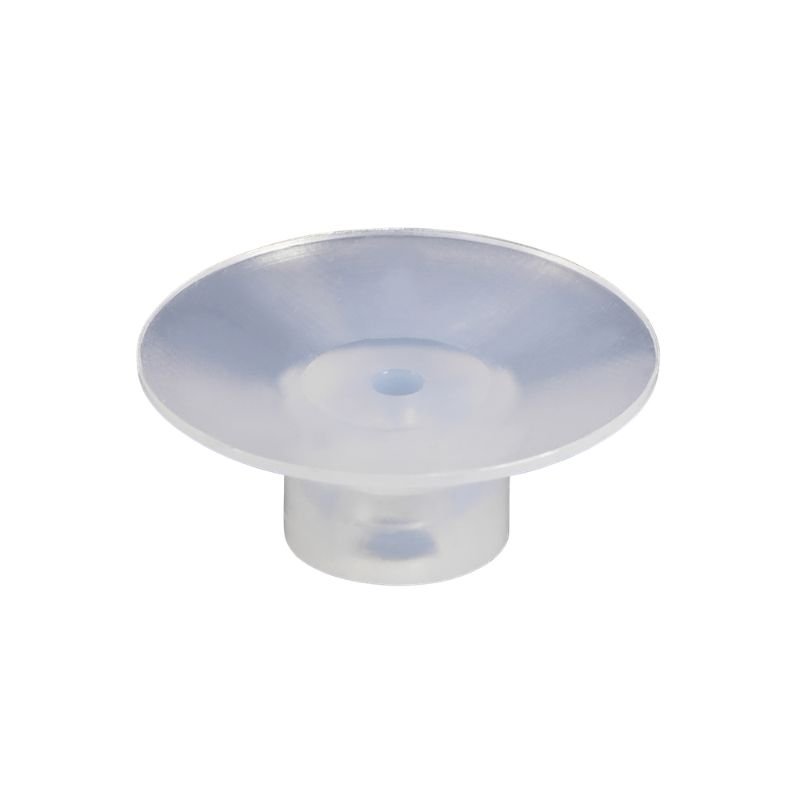
It features a low-profile flat face that delivers stable vacuum holding for rigid, smooth workpieces.
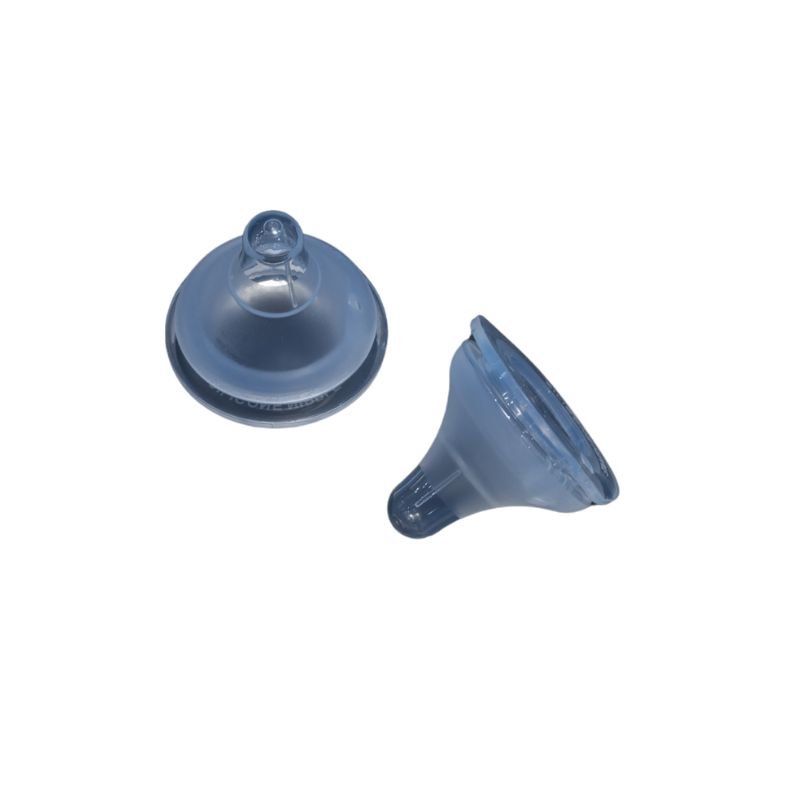
It is available in 1.5-, 2.5- and 3.5-fold versions, which provide height compensation for uneven and slightly curved surfaces.
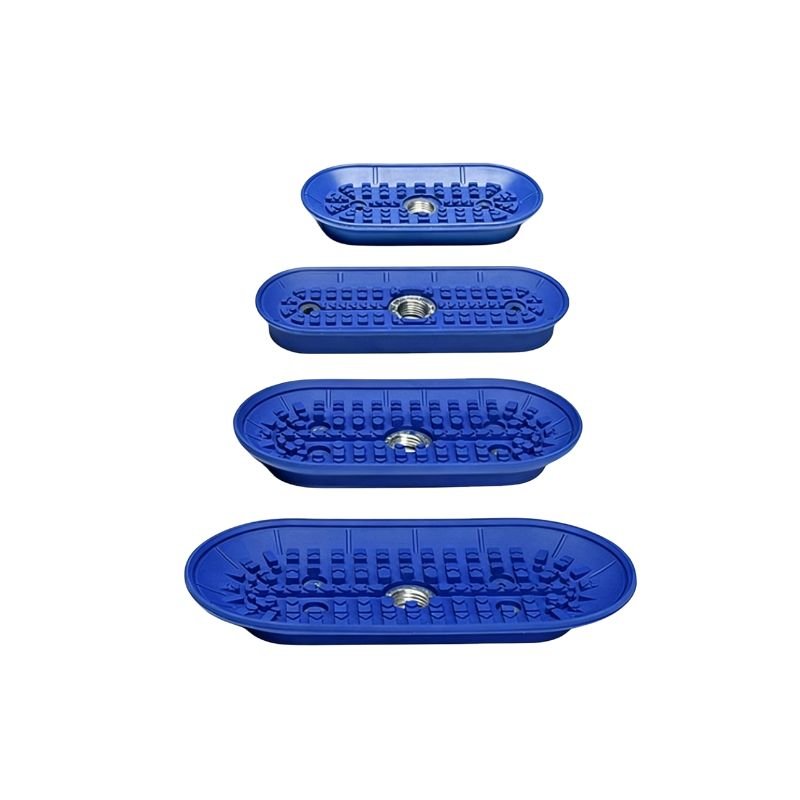
The deep cup cavity can hold curved and irregularly shaped workpieces securely.
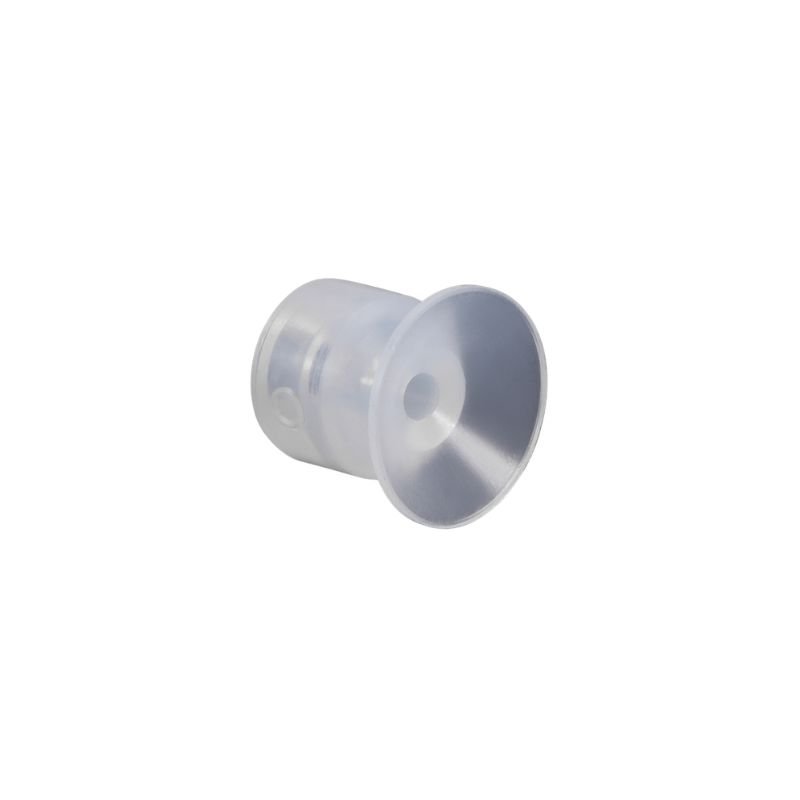
The ultra-thin lip reduces marking on delicate electronic and soft components thanks to its LSR-molded construction.
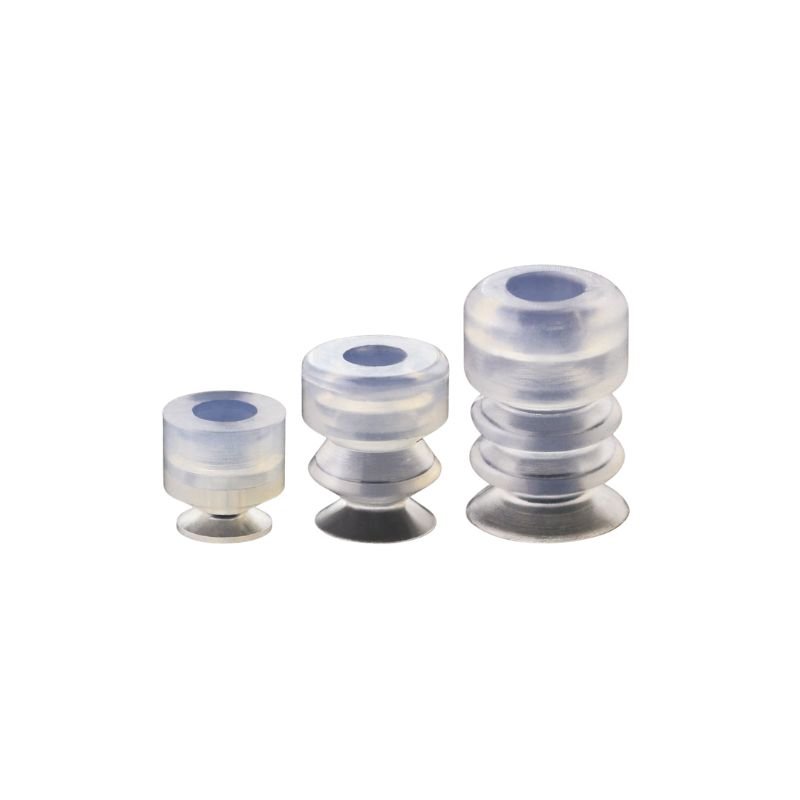
Its reinforced, thick body can withstand high loads and frequent cyclic operating conditions.
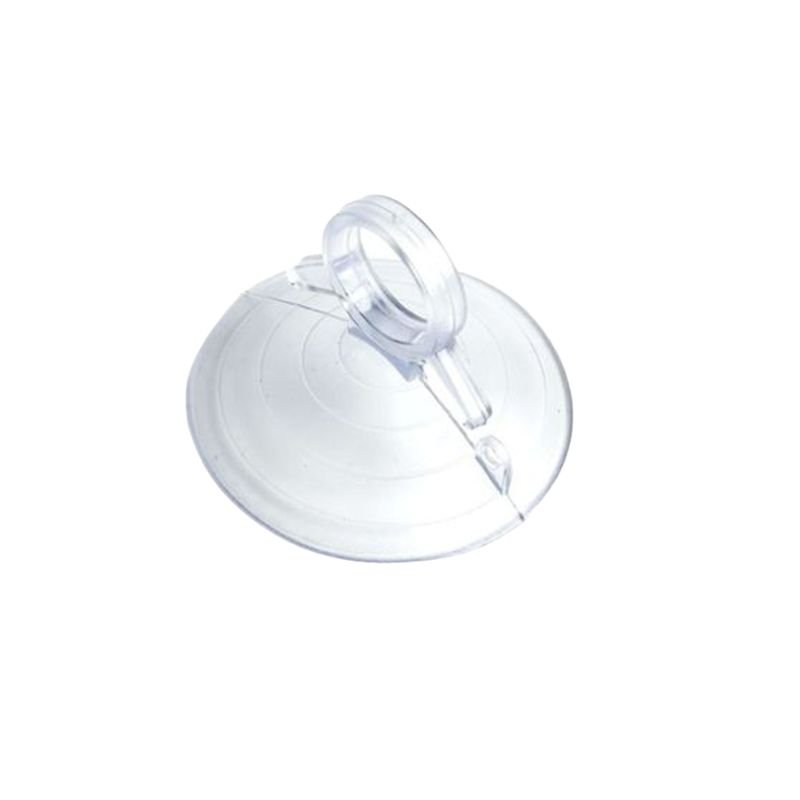
We can produce fully customisable geometry based on your specifications.
Silicone Suction Cups We Made
These are the silicone suction cup styles that we have produced most frequently over the past month. All of these can be adjusted to meet your specific requirements.
 Production‑Line Sheet‑Transfer Suction Cups
We fit custom suction cups to robotic end tools for handling metal, glass and plastic sheet parts during high-speed production-line transfer operations.
 Uneven‑Surface Part‑Gripping Suction Cups
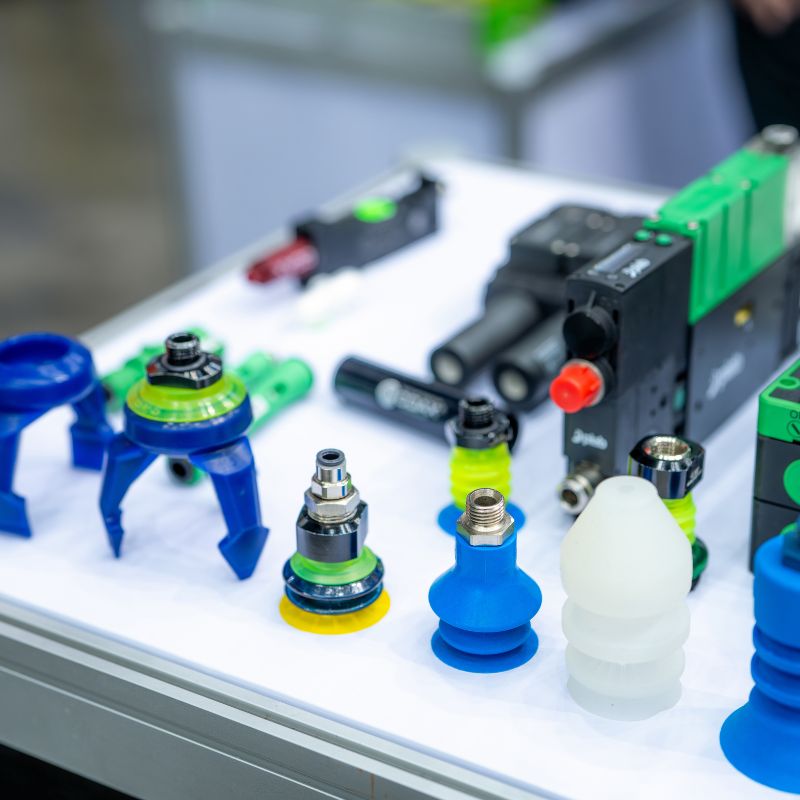
Designed for general pick-and-place machinery and can absorb minor height variations, ensuring a reliable grip on slightly contoured manufactured parts.
 High‑Cycle Industrial‑Machine Suction Cups
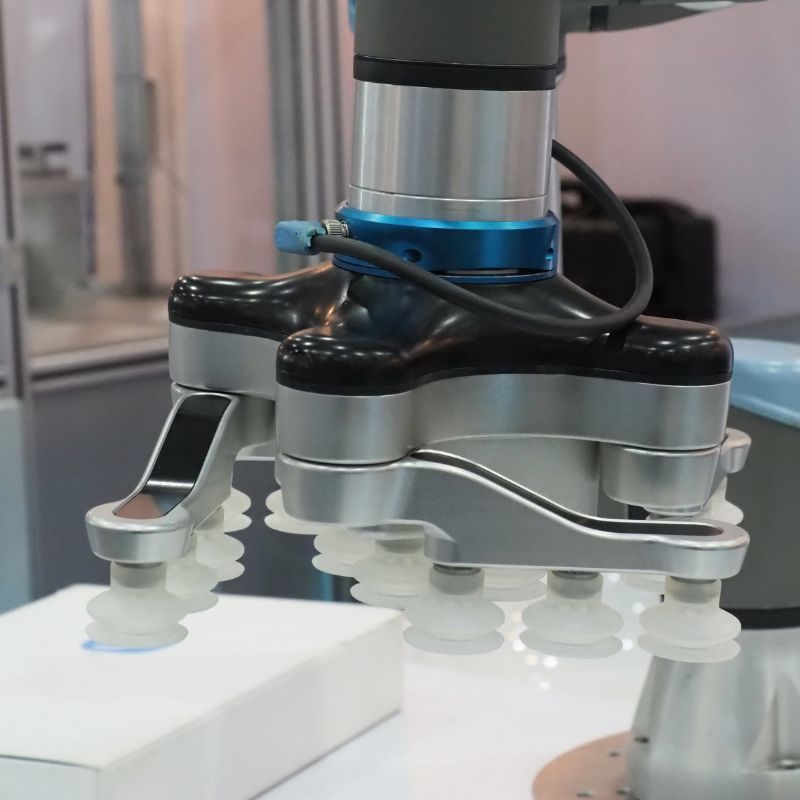
Robust suction cups for continuous-run industrial equipment that maintain stable sealing performance during frequent, repeated grab-and-release cycles.
 Delicate‑Component Non‑Marking Handling Suction Cups
Precision suction cups for handling semiconductors and electronics, designed to transfer fragile circuit boards and optical parts without leaving surface indentations.
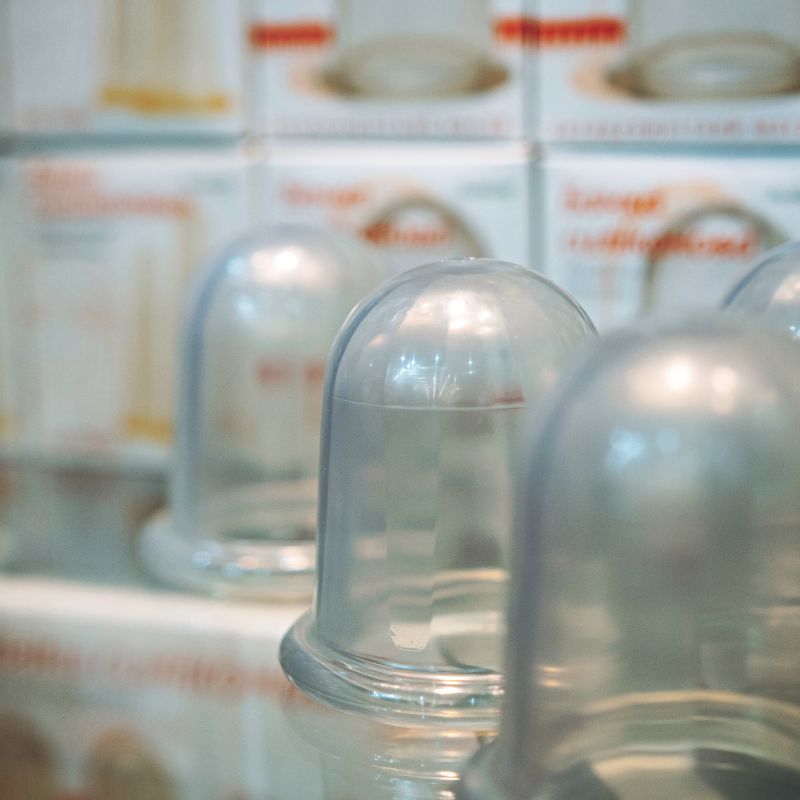 Sanitary‑Processing‑Equipment Suction Cups
Food-contact suction cups are integrated into filling and packaging machinery and are tolerant of regular sanitizing cycles in clean production environments.
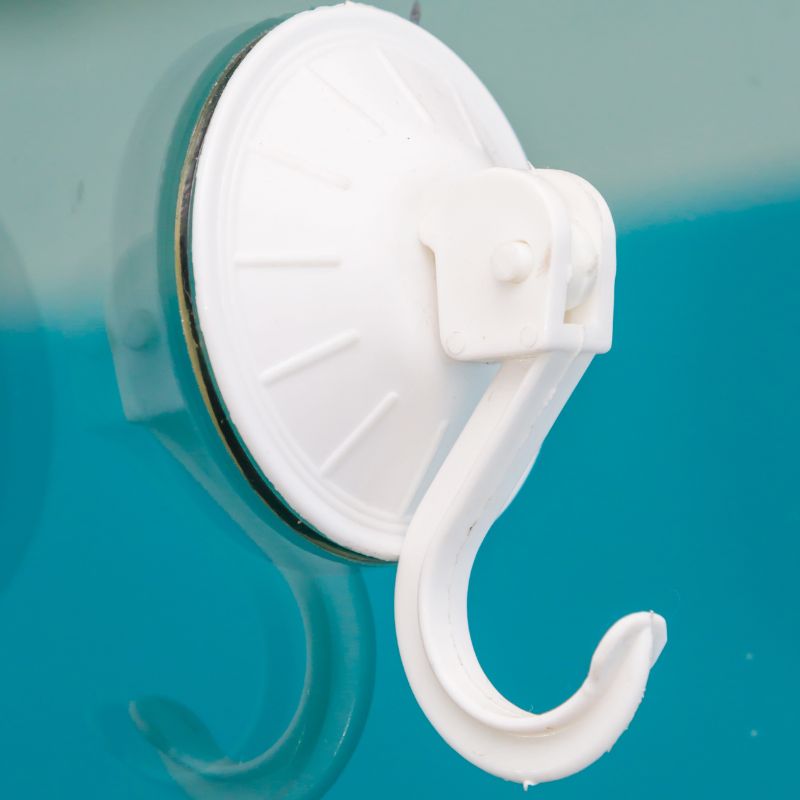 Consumer‑Fixture Press‑Fit Suction Cups
Engineered for household end products and provide simple, stick-on solutions for mounting bathroom hardware and phones.
Why Choose Niceone-Rubber Silicone Suction Cups

Resists vacuum decay under temperature cycling, humid and oily conditions, and prevents indentation on thin, soft workpieces.

Precision-molded lips eliminate vacuum drift from mold flash, preventing vacuum leakage caused by micro-burrs or flash and keeping suction variation below 5%.

The 2K or multi-durometer molding provides a balanced seal with a 60–70 Shore A base and a 20–30 Shore A lip.

Choose from matt anti-stick or high-gloss sealing surfaces, both of which offer adjustable friction for consistent pick-and-release speed.

Minimise contamination risk with LSR, FDA‑approved, FVMQ, ESD & low‑outgassing for semiconductor, food, and medical use.

Resists UV, ozone and cracking during repeated cycles, thereby extending service life and reducing unplanned replacement downtime.

Compliant with RoHS, REACH, FDA and LFGB. We support ISO 13485 medical projects and provide full material trace records.

We offer free DFM reviews and NDA coverage to help you reduce mold risks and ensure consistency from prototype to mass production.
Stable Vacuum Holding Consistency
With precision-molded sealing lips, our suction cups prevent vacuum leakage caused by burrs and uneven thicknesses. They comply with ISO 3302-1 M1/M2 tolerance standards and keep suction fluctuation below 5% during long-term cyclic use. They provide a stable grip on thin, soft and smooth workpieces without causing any indentation or slippage, making them ideal for precision fixture and vacuum holding applications.
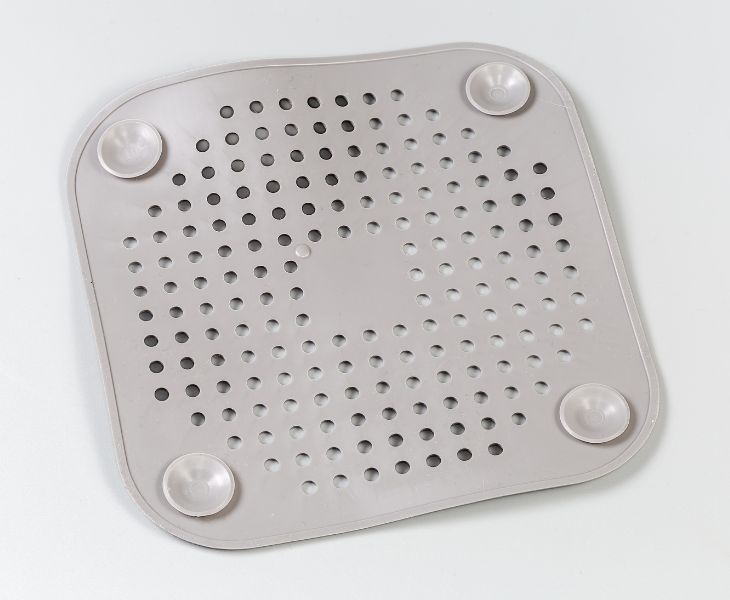
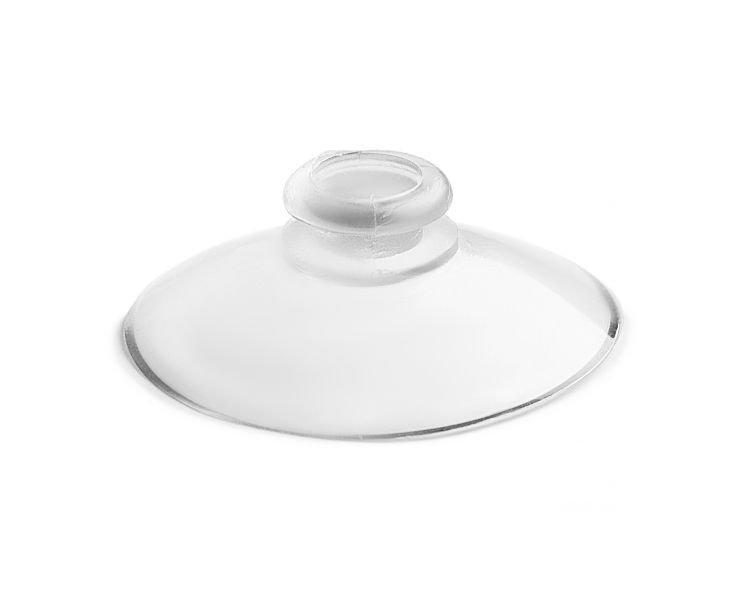
Exclusive Anti-Fatigue Suction Structure
Featuring a proprietary dual-hardness gradient structure, our silicone suction cups avoid common suction cup defects: rigid edges scratching workpieces or soft bodies collapsing and deforming. The matched hardness structure maintains intact sealing contact on curved and irregular surfaces, delivering durable and reliable vacuum holding performance in repeated clamping operations.
Niceone‑Rubber Silicone Suction Cups Specifications
- Technical Specifications
- Material Options
- Mounting & Custom Options
| Parameter | Specification |
| Hardness Range | Shore A 30–70 (Dual‑hardness gradient lip optional) |
| Operating Temperature | -40°C ~ +200°C (FVMQ grade for harsh chemical/oily environments) |
| Tolerance Standard | ISO 3302‑1 M1 / M2 / M3 |
| Suction Stability | Fluctuation ≤5% under qualified installation |
| Recommended Working Pre‑compression | 10%–25% for long‑term vacuum sealing stability |
| Cycle Life | 1,000,000+ continuous pick‑and‑release cycles under standard pre-compression (10%–15% stroke); service life varies with workpiece and operating conditions |
| Surface Feature | Matt anti‑stick / High‑gloss leak‑proof optional |
| Environmental Resistance | UV, ozone, humidity and temperature cycling resistant |
| Workpiece Adaptation | Thin film, soft sheet, smooth and curved precision parts |
| Material Grade | Key Properties | Typical Application |
| Standard VMQ Silicone | Balanced elasticity, cost‑effective | General industrial vacuum fixtures, positioning jigs |
| FVMQ Fluorosilicone | Excellent oil & chemical resistance, wide temperature range | Automotive, oily working environments, harsh chemical handling |
| Low-Outgassing Silicone (VMQ / LSR) | ASTM E595 compliant (TML <1.0%, CVCM <0.10%) | Semiconductor vacuum chambers, optical and high-vacuum handling |
| Platinum‑Cure LSR | Non‑toxic, low residue, high purity | Medical instruments, food‑processing equipment |
| ESD Conductive Silicone | Anti‑static, dust‑proof performance | Electronic component suction and handling |
| Mounting Type | Best For | Custom Options |
| Through‑hole Vacuum Port | Standard automated vacuum system | Custom hole diameter, vent structure optimization |
| Threaded Interface | Fixed robotic EOAT installation | Metric/imperial thread size, customized mounting depth |
| Concealed Embedded Base | Flat and smooth surface assembly | Custom cup depth, outer contour dimension |
| Custom Profiled Lip | Special curved/irregular workpieces | Lip thickness, edge radius, dual‑hardness gradient tuning |
- Porous surfaces such as uncoated cardboard and raw wood cannot be sealed.
- They also fails on highly rough or pitted surfaces, as the lip cannot achieve full contact.
- Oil, grease and loose dust can also cause problems — for example, they can break the lip seal and lead to vacuum leaks.
- If your parts are covered in light oil or dust, clean them before picking them up.
- For heavy oil or rough surfaces, you may require FVMQ material, which has better oil resistance, or an alternative gripping method.
- Lip wear or damage: Vacuum leaks will occur if the sealing edge is nicked, cracked or worn unevenly. Once that happens, the holding force drops.
- Incorrect pre-compression: If you squeeze it too hard, the lip will flatten out and lose its ability to conform. If it’s too soft, the seal never really engages. Either way, the suction is affected.
- Vacuum system issues: Even if the cup itself is perfectly fine, insufficient airflow from the generator, undersized tubing or poorly fitted fittings can starve it.
- Contamination: Oil, dust, moisture or mold on the lip or workpiece can damage the seal. A simple wipe often restores it.
- Ageing: Over time, exposure to UV rays, ozone and heat can cause the silicone to harden. Replace the cup if it feels stiff or if you see surface cracks.
Yes, in most cases. Provided the mounting interface and cup diameter are compatible, silicone cups can be used as a direct replacement for rubber or urethane cups in existing EOAT.
Match cup geometry: Use flat cups for flat, smooth parts. For curved surfaces, choose 1.5-, 2.5- or 3.5-fold bellows cups. If you are processing delicate PCBs, glass or thin films, choose thin-lip soft cups to avoid surface marks.
Select material: Choose the right material for your working conditions: standard silicone for general tasks; FVMQ for heat and oil; FDA/LFGB for food; low-outgassing for optics; and ESD for handling electronics.
Confirm mounting: through-hole, threaded, or custom bases for non-standard tooling.
The theoretical holding force formula is as follows: F = P × A, where F is the holding force in newtons (N), P is the vacuum pressure in kilopascals (kPa) and A is the effective sealing area. Always apply a safety factor of n ≥ 2 for horizontal transfer and n ≥ 4 for vertical lifting or high-acceleration (>1 g) robotic handling. The actual achievable force relies on complete lip contact and properly sized vacuum systems.
Choose the right lip geometry and hardness. Thin-lip cups reduce contact pressure for PCBs, glass, and optical parts. The soft shore A 20-35 silicone molds gently to avoid indentations, and the LSR-molded lips provide clean edges. The low-outgassing material prevents silicone-oil transfer. Dual-hardness gradient cups combine soft sealing lips with rigid supporting bases. Correct pre-compression also helps to prevent excessive contact force.
Request Your Silicone Suction Cups Solution
Complete the form and, if available, attach 2D/3D drawings. Specify the type of workpiece, cup size, mounting interface, load, and operating conditions. For custom orders, please state the material grade and annual demand. 3D CAD models (STEP/IGS) are available on request.
Our engineers will reply within 24 working hours with quotations, material suggestions, and DFM feedback. Prototype samples and NDA agreements are also available on request.